Used Campers for Sale by Owner: Private RV Buying Guide
Buying a used camper for sale by owner? Learn the first-call questions, records to request, title and lien checks, inspection steps and safe payment.
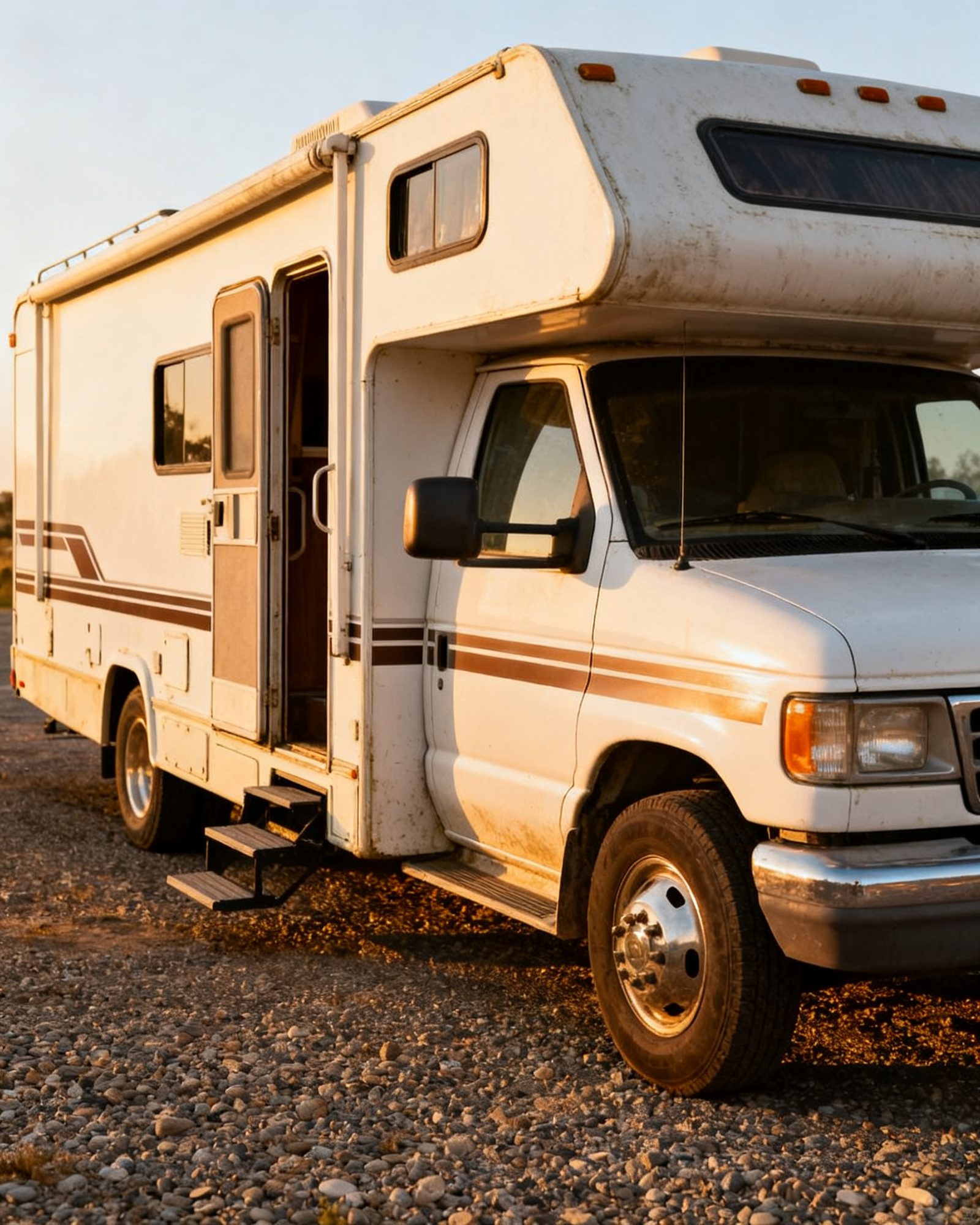
A used camper for sale by owner can be the best-value way into RV ownership, and the riskiest. You often get a lower price than a dealer charges and a seller who knows the unit’s history firsthand. You also get no warranty, no dealer to return to, and paperwork that falls on you. The way to make a private RV sale work is to slow it down: ask the right questions on the first call, verify the title and lien, have the RV inspected, and pay in a way that leaves a trail.
What a private sale gains and loses
| Factor | Private seller | Dealer |
|---|---|---|
| Price | Often lower, open to negotiation | Often higher, and fees may be added |
| History | Owner can describe use, storage and repairs | Often unknown between owners |
| Warranty | Usually none, sold as-is | May offer a limited warranty or service contract |
| Paperwork | Buyer does more of it | Dealer handles much of it |
| Recourse | Limited once you drive away | Business to complain to |
| Selection | One unit at a time | Many units to compare |
A private seller usually has no warranty obligation, and a private sale is generally as-is. That is not a reason to avoid private sales; it is a reason to inspect before money changes hands. For a fuller comparison of the two routes, see buying a used RV from a dealer vs a private seller.
Where private RVs are listed
Search terms like “used campers for sale near me by owner” and “RV for sale by owner” turn up a mix of classified sites, social media groups, community boards and word of mouth. None of them vet the seller. Treat every listing as an advertisement, not a reference. The same applies to used motorhomes for sale through private channels: the listing tells you what the seller wants you to know.
When you find a candidate, note the VIN from the listing or ask for it before you drive out. A 17-character VIN (no letters I, O or Q) lets you check recalls and history before you spend a day on the road.
Questions to ask on the first call
Ask these before arranging a viewing. Vague answers are information too.
- How long have you owned it, and why are you selling?
- Is the title in your name, and is there a lien on it?
- How was it stored — indoors, under cover, or outside?
- Has it had water damage, delamination or roof repairs?
- When were the roof and seams last sealed?
- How old are the tires, and what is the DOT date code on each?
- Do the appliances, water system, slide-outs and generator work?
- Do you have maintenance and repair records?
- Has it been in any accidents or insurance claims?
- Can a qualified RV technician inspect it before purchase?
A seller who refuses an independent inspection, or who cannot produce a title in their own name, is a reason to walk away.
Records to ask for
Ask to see, not just hear about:
- The title, with the seller’s name matching their photo ID.
- Any lien release from a lender.
- Maintenance and repair receipts, including roof and seam work.
- Tire purchase records showing dates.
- Propane and appliance service records.
- Any inspection reports from previous sales.
Records are not proof of condition, but a seller with none at all is a seller who has not been maintaining the RV in a documented way.
Meeting safely and looking it over
Meet in daylight, bring another person, and tell someone where you are going. Ask the seller to have the RV powered up, with the water system connected if possible, so you can see things work rather than hear that they do.
Walk the exterior first. Look for bubbles, waves or ripples in the sidewalls — delamination, usually a sign water has got in. Check the roof, seams, corners, windows, roof vents, the cabover on a Class C, and around slide-outs for cracked sealant, stains and soft spots. Inside, press floors and walls for softness and smell for mustiness. A moisture meter on interior walls finds damp you cannot see.
On a motorhome, start the engine and check for smoke, noises and warning lights. On a towable, inspect the frame, hitch and axles. Ask the seller to demonstrate every system, and watch rather than take over.
Title, lien and VIN checks
Before money moves, confirm three things:
- The seller named on the title is the person selling, with photo ID that matches.
- Any lien has been released — a lien release from the lender, or the lender’s signature on the title.
- The VIN on the title, the registration and the federal certification label all match and show no sign of alteration.
Run the VIN through the NHTSA recall lookup for open safety recalls. A motorhome can have recalls from both the chassis maker and the company that built the living area. Check title brands and total-loss records through an NMVTIS-approved provider, and theft and total-loss records through the NICB’s free VINCheck. A branded title affects financing, insurance and resale.
Titling, registration, sales tax and trailer rules vary by state: check your state DMV. The full sequence is set out in RV title transfer and paperwork when buying used.
The independent inspection
An independent RV inspector, chosen and paid by you, examines the RV before purchase. On a motorhome, add a lab analysis of engine oil, coolant and transmission fluid. The inspector should check the roof and seals, water intrusion, the propane system, the 12-volt and 120-volt systems, appliances, the water system, tires and, on a motorhome, the chassis and drivetrain.
Propane, 120-volt and 240-volt electrical and generator work is a job for a qualified RV technician. Do not attempt to test or repair those systems yourself during a viewing.
Read the weight label and compare its cargo carrying capacity with what you plan to carry; once the RV is yours, weigh it loaded at a public scale. Water weighs about 8.3 pounds per gallon and propane about 4.2 pounds per gallon, so tanks and cylinders add up quickly.
Tires, seals and the costs after purchase
RV tires often age out before the tread wears out. Common guidance is a yearly inspection once tires are 5 years old and replacement no later than 10 years from the date of manufacture, whatever the tread looks like. The DOT code’s last four digits give week and year: 2419 means the 24th week of 2019. ST tires without a speed rating are limited to 65 mph.
Roof and seam sealants dry out and crack with age and must be inspected and renewed. Budget for that work, for tires, and for any repairs the inspection turns up. A used RV is a maintenance commitment, not a one-time purchase.
Paying a private seller safely
Meet at the buyer’s bank, check the title and the seller’s ID, pay by cashier’s check or a transfer made in person, and sign the title and bill of sale at the same time. The bill of sale should record buyer, seller, date, sale amount, VIN, year, make and model, and “as is” where there is no warranty; some states have their own form.
Federal law requires an odometer disclosure when a motor vehicle changes owner, with exemptions by age or weight; trailers have no odometer. The state DMV supplies the forms.
There is no general right to cancel a signed vehicle purchase afterwards. Once you sign and pay, the RV is yours.
What goes wrong: red flags and common mistakes
- A price far below comparable RVs. This is the opening move in vehicle-sale scams the FTC and FBI warn about. The pattern includes a seller who cannot meet, payment by wire transfer or gift cards, an “escrow” or shipping service the seller chooses, and pressure to pay before you see the RV and the title. More in used RV scams.
- No title in the seller’s name. A lien that is not released, or a title held by someone else, means ownership cannot pass cleanly.
- Refusing an inspection. A confident seller welcomes one.
- Skipping the roof and seams. Water damage is among the most common and most expensive defects in used RVs.
- Buying on the first look. Sleep on it, check the VIN, and read the paperwork twice.
- Paying before signing. Do both at once, in person, at the bank.
- Forgetting the tow vehicle. A trailer’s tongue weight is commonly 10 to 15 percent of the loaded trailer weight, and a fifth wheel’s pin weight 15 to 25 percent. The tow vehicle’s payload must cover passengers, cargo, the hitch and that weight.
Before you hand over the money
Use this checklist:
- Title in the seller’s name, ID matches
- Lien released in writing
- VIN matches on title, registration and certification label
- NHTSA recalls checked
- NMVTIS and NICB checks run
- Independent inspection completed
- Weight label read and cargo capacity checked
- Tire DOT dates recorded
- Bill of sale and odometer disclosure completed
- Payment made in person at the bank
- State DMV requirements confirmed
A private RV sale rewards patience. The seller’s history and a lower price are real advantages; the missing warranty is the trade. Verify, inspect and document, and the used camper for sale by owner can be a sound purchase.
Common questions
Is it safe to buy a used camper from a private owner?
It can be, if you verify the title and lien, run the VIN through recall and history checks, and have an independent inspector examine the RV. A private sale is usually as-is with no warranty, so the inspection is your protection.
What should I ask a private RV seller before I visit?
Ask how long they have owned it, whether the title is in their name and free of liens, how it was stored, whether it has had water damage, when the roof was last sealed, the tire DOT dates, and whether they will allow an independent inspection.
How do I check for a lien on a used RV?
Ask to see the title and look for a lender listed as lienholder. If a lien exists, it must be released with a lien release from the lender or the lender's signature on the title before ownership can pass. Check your state DMV for local procedures.
How should I pay a private RV seller?
Meet at the buyer's bank, check the title and the seller's photo ID, and pay by cashier's check or an in-person transfer. Sign the title and bill of sale at the same time. Avoid wire transfers, gift cards and any escrow service the seller chooses.
Do I need an inspection when buying an RV by owner?
It is strongly recommended. An independent RV inspector chosen and paid by the buyer checks the roof and seals, water intrusion, propane and electrical systems, appliances, tires and, on a motorhome, the chassis and drivetrain. On a motorhome, a lab analysis of engine oil, coolant and transmission fluid can be added.
Read next
RV Dealer vs Private Seller: Where to Buy a Used RV
Compare buying a used RV from a dealer or a private seller: price room, inspection access, warranty, financing, fees, paperwork and risk, plus what to check.
Repo RVs for Sale: How Bank Repos and Auctions Work
How repossessed RVs reach the market, what as-is really means, and how to inspect, bid and check the title before you commit to a repo RV.
Used RV Scams: Fake Listings, Escrow Tricks and Safe Payment
Learn the common used RV scams, from fake listings and escrow tricks to wire-transfer demands, plus how to check a seller and pay safely in person.