Used Motorhomes for Sale: Where to Look and How to Buy
Where used motorhomes are sold, how to inspect one, check the title and VIN, and pay safely. A practical US guide for first-time buyers.
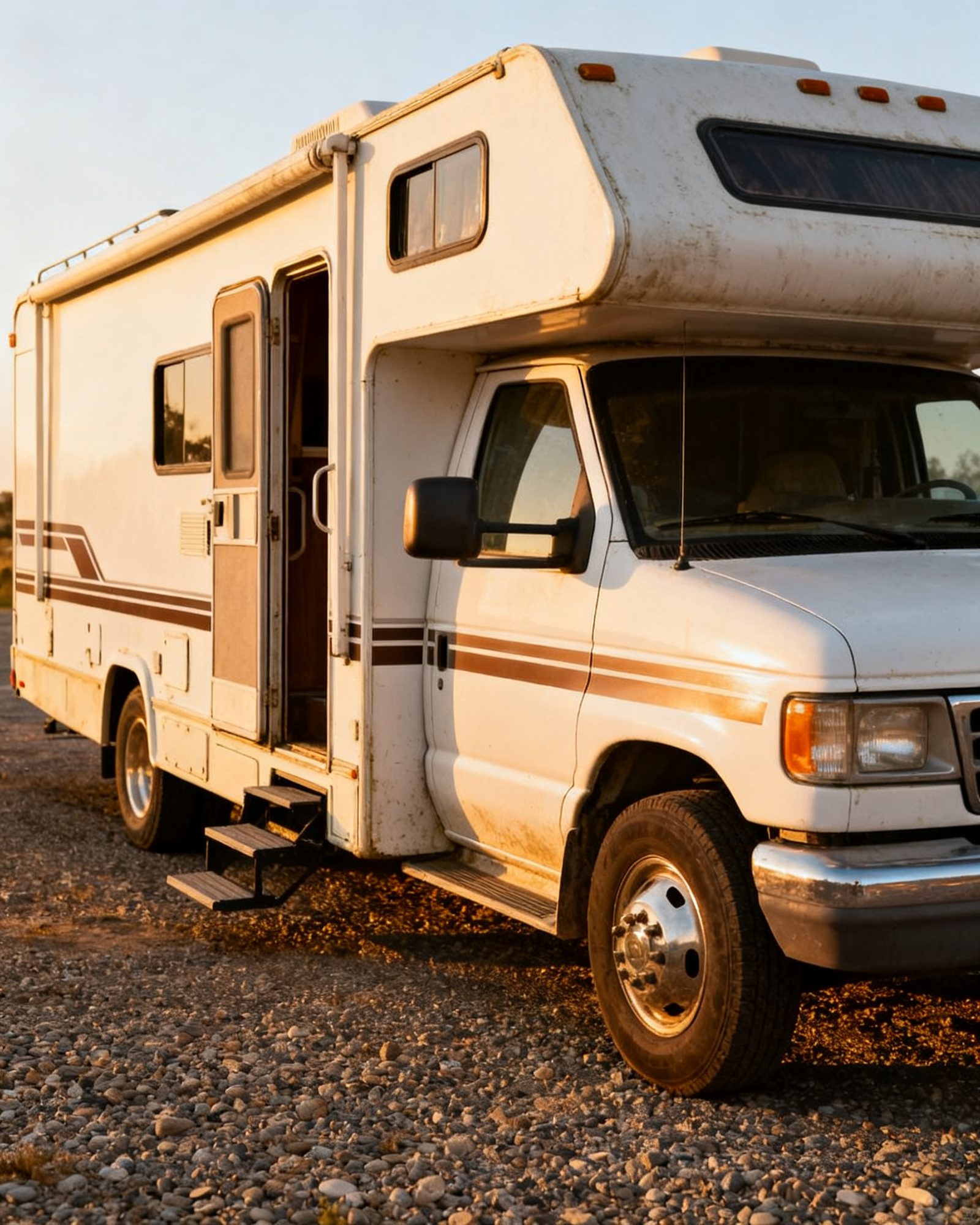
Used motorhomes for sale turn up through private sellers, dealers, consignment lots, lender repossession sales and auctions, and each route carries a different mix of price room, paperwork and risk. This site lists no RVs and sells nothing; it explains how to find one, what to ask, what to check and how to pay without losing money.
Decide what you need before you search
Start with use, not looks. A couple touring paved roads for weekends has different needs from a family towing a toy hauler or a buyer planning unpaved access. The class you pick sets the length, the weight and the systems you will have to maintain. A guide to RV classes explains the difference between Class A, B and C motorhomes and the towable types, including fifth wheels, travel trailers and truck campers.
Write down three things: how many people sleep aboard, whether you need a bathroom and a shower, and whether you will tow a vehicle. Then set a ceiling on the loaded weight you can legally and safely handle. A motorhome’s GVWR and its cargo carrying capacity are on the weight label, usually inside a cabinet or near the entry door. A trailer’s tongue weight has to fit inside the tow vehicle’s payload, which is on the tire and loading label on the driver’s door jamb.
Where used motorhomes are sold
| Source | What it means for you | Watch for |
|---|---|---|
| Private seller | Usually the most room to negotiate; often as-is with no warranty | Title and lien problems, a seller who refuses an inspection, payment scams |
| Dealer | A lot to walk, sometimes a limited warranty, paperwork handled | Documentation fees and optional products added at signing |
| Consignment | A dealer sells a privately owned RV for the owner for a fee or commission | Who actually holds the title, and who answers for defects |
| Lender or repo sale | Sold by the lender, usually as-is | Slow title transfer, limited inspection time |
| Auction | Often as-is, sometimes with a buyer’s premium | Short inspection windows and unclear history |
Private sales are covered in detail in buying a used camper from a private owner. Repossessions and auctions have their own rhythm; how repo RV sales work explains the lender’s process, the buyer’s premium and the paperwork delay.
A search for used motorhomes for sale near me or a motor RV for sale near me will surface all of these at once. Sort by distance, then by type, then read the listing for the VIN, the weight label photo and the maintenance records. A listing without a VIN is a reason to ask, not automatically a reason to walk, but a seller who will not send one is a reason to stop.
The order of steps from first call to signed title
- Call or message the seller with a short list of questions.
- Run the VIN through a title-history service and the NHTSA recall lookup.
- Walk around the RV in daylight, then inside it.
- Drive it on local roads and the highway.
- Hire an independent RV inspector, chosen and paid by you.
- Confirm the title, the lien status and the seller’s ID.
- Pay and sign the title and bill of sale at the same time.
Questions to ask before you drive out
Ask for the VIN, the year, make and model, the mileage on a motorhome, the title status, whether a lender holds a lien, and whether the RV has been in a flood or a collision. Ask how long the seller has owned it, why it is being sold, and whether the roof and seams have been resealed. Ask for photos of the weight label, the tire sidewalls and the roof. Ask whether the appliances, the water system and the generator were used recently, and whether any propane or electrical work has been done. Work on propane, 120-volt or 240-volt electrical systems and generators is a job for a qualified RV technician, so ask who did it and for the paperwork.
The walk-around and the test drive
Look at the sidewalls for bubbles, waves or ripples. That is delamination, the outer fiberglass skin separating from the wall behind it, and it usually means water has got in. Check the roof, the seams, the corners, the cabover and around the slide-outs for cracked sealant, stains and sagging. A moisture meter on interior walls finds damp you cannot see. Inside, press the floor and the walls for soft spots and smell for mustiness.
On a motorhome, start the engine from cold, watch for smoke, listen for knocks, and check that every gauge moves. Drive at highway speed and brake firmly in a safe place. On a trailer, check the tires for date codes and cracks, and confirm the brake controller and breakaway system work. The full sequence is in the used RV inspection checklist.
The independent inspection
An independent RV inspector examines the RV before purchase and is chosen and paid by the buyer. On a motorhome, a lab analysis of engine oil, coolant and transmission fluid can be added. It is a buyer’s best protection against a roof leak or a failing drivetrain that the seller has not mentioned. If the seller refuses access for an inspector, treat that as a red flag.
VIN, title and lien checks
Since the 1981 model year, on-road vehicles sold in the US, trailers included, carry a 17-character VIN. A VIN never uses the letters I, O or Q, and the 10th character gives the model year. The VIN on the title, the registration and the federal certification label on the vehicle must all match and show no sign of alteration.
Run the VIN through NMVTIS, the federal database of title brands, odometer readings and total-loss records, using an NMVTIS-approved data provider. The National Insurance Crime Bureau’s free VINCheck shows theft and total-loss records reported by participating insurers. A motorhome can have safety recalls from two makers, the chassis manufacturer and the company that built the living area, so check the NHTSA recall lookup by VIN.
Title brands, whose names vary by state, include salvage, rebuilt or reconstructed, flood and junk. A branded title affects financing, insurance and resale. The seller named on the title should be the person selling, with photo ID that matches. If a lender holds a lien, it must be released before ownership can pass, either with a lien release from the lender or the lender’s signature on the title. Titling, registration, sales tax, temporary permits and trailer rules vary by state, so check your state DMV.
Paying without getting burned
There is no general right to cancel a signed vehicle purchase afterwards, and a private sale is usually as-is with no warranty. Meet at the buyer’s bank, check the title and the seller’s ID, pay by cashier’s check or a transfer made in person, and sign the title and bill of sale at the same time. The bill of sale records buyer, seller, date, the sale amount, VIN, year, make and model, and as-is where there is no warranty; some states have their own form. Federal law requires an odometer disclosure when a motor vehicle changes owner, with exemptions for age or weight, and the state DMV supplies the forms. Trailers have no odometer.
Vehicle-sale scams follow a pattern the FTC and FBI warn about: a listing far below comparable RVs, a seller who cannot meet, payment by wire transfer or gift cards, an escrow or shipping service the seller chooses, and pressure to pay before seeing the RV and the title. Walk away from any of those.
If you need a loan, an RV loan is usually secured by the RV. A longer term lowers the monthly payment but raises the total interest paid and the chance of owing more than the RV is worth. Under the federal Truth in Lending Act, lenders must disclose the APR and the total finance charge before you sign, so compare total cost, not monthly payment. Lenders set their own rules on age, type and value, so check with your lender, and see how loans for a used RV work before you shop. Dealers may add documentation fees and optional products, so ask for an itemized out-the-door total before signing.
What goes wrong, and how to avoid it
- Water damage bought unseen. Soft floors, stained ceilings and ripples in the sidewall point to water damage, among the most common and most expensive defects in used RVs. Inspect the roof and seams, use a moisture meter, and walk away from active leaks.
- A branded title discovered late. A salvage or flood title changes what the RV is worth and whether it can be financed or insured. Check the VIN before you pay.
- A lien that was never released. The seller may not own the RV outright. Confirm the lien release before money changes hands.
- Tires that look fine but are old. RV tires often age out before the tread wears out. The DOT code ends in four digits giving week and year of manufacture, and common guidance is a yearly inspection once tires are 5 years old and replacement no later than 10 years from manufacture. ST tires without a speed rating are limited to 65 mph.
- A propane or electrical fault. If you smell propane, put out flames, do not operate electrical switches, close the tank valve if it is safe, open doors, get everyone out, and have the system checked by a qualified RV technician before using it again. Do not attempt repairs to propane, 120-volt or 240-volt wiring, the converter, the inverter or the generator yourself.
- A payment sent before the title was seen. Meet in person, at a bank, with the title and ID on the table.
A last look before you sign
Know the RV’s exact height, including roof air conditioners and antennas, and keep it written where the driver can see it. Confirm the VIN on the certification label matches the title and the registration. Check that the smoke, carbon monoxide and LP gas alarms are within their replacement date. If the seller cannot show a clean title, a matching ID and a released lien, there is no deal to make.
Common questions
Where can I find used motorhomes for sale near me?
Private sellers, dealers, consignment lots, lender repossession sales and auctions all list used motorhomes. Sort by distance and type, then ask for the VIN and the weight label photo before you drive out. This site lists no RVs itself.
How do I check a used motorhome before buying it?
Run the VIN through a title-history service and the NHTSA recall lookup, check the roof and seams for cracks and stains, press the floors and walls for soft spots, and drive it. Then hire an independent RV inspector you choose and pay for. Propane and electrical work is a job for a qualified RV technician.
Is it safe to buy a used motorhome from a private seller?
It can be, if you check the title and the seller's ID, confirm any lien is released, and pay at the buyer's bank by cashier's check or an in-person transfer. A private sale is usually as-is with no warranty, and there is no general right to cancel afterwards.
What paperwork do I need to buy a used motorhome?
You need the title signed over by the seller named on it, a bill of sale with the VIN, year, make, model and sale amount, and an odometer disclosure where federal law requires one. Titling and registration rules vary by state, so check your state DMV.
Should I finance a used motorhome or pay cash?
An RV loan is usually secured by the RV, and a longer term lowers the monthly payment but raises the total interest and the risk of negative equity. Compare APRs and total cost, not monthly payments, and check with your lender on age and value rules.
Read next
RV Dealer vs Private Seller: Where to Buy a Used RV
Compare buying a used RV from a dealer or a private seller: price room, inspection access, warranty, financing, fees, paperwork and risk, plus what to check.
Repo RVs for Sale: How Bank Repos and Auctions Work
How repossessed RVs reach the market, what as-is really means, and how to inspect, bid and check the title before you commit to a repo RV.
Used RV Scams: Fake Listings, Escrow Tricks and Safe Payment
Learn the common used RV scams, from fake listings and escrow tricks to wire-transfer demands, plus how to check a seller and pay safely in person.