RV Water Systems: Fresh, Gray and Black Tanks
How a used RV's fresh, gray and black tanks work: dumping in the right order, keeping sensors honest, avoiding clogs and smells, and winterizing.
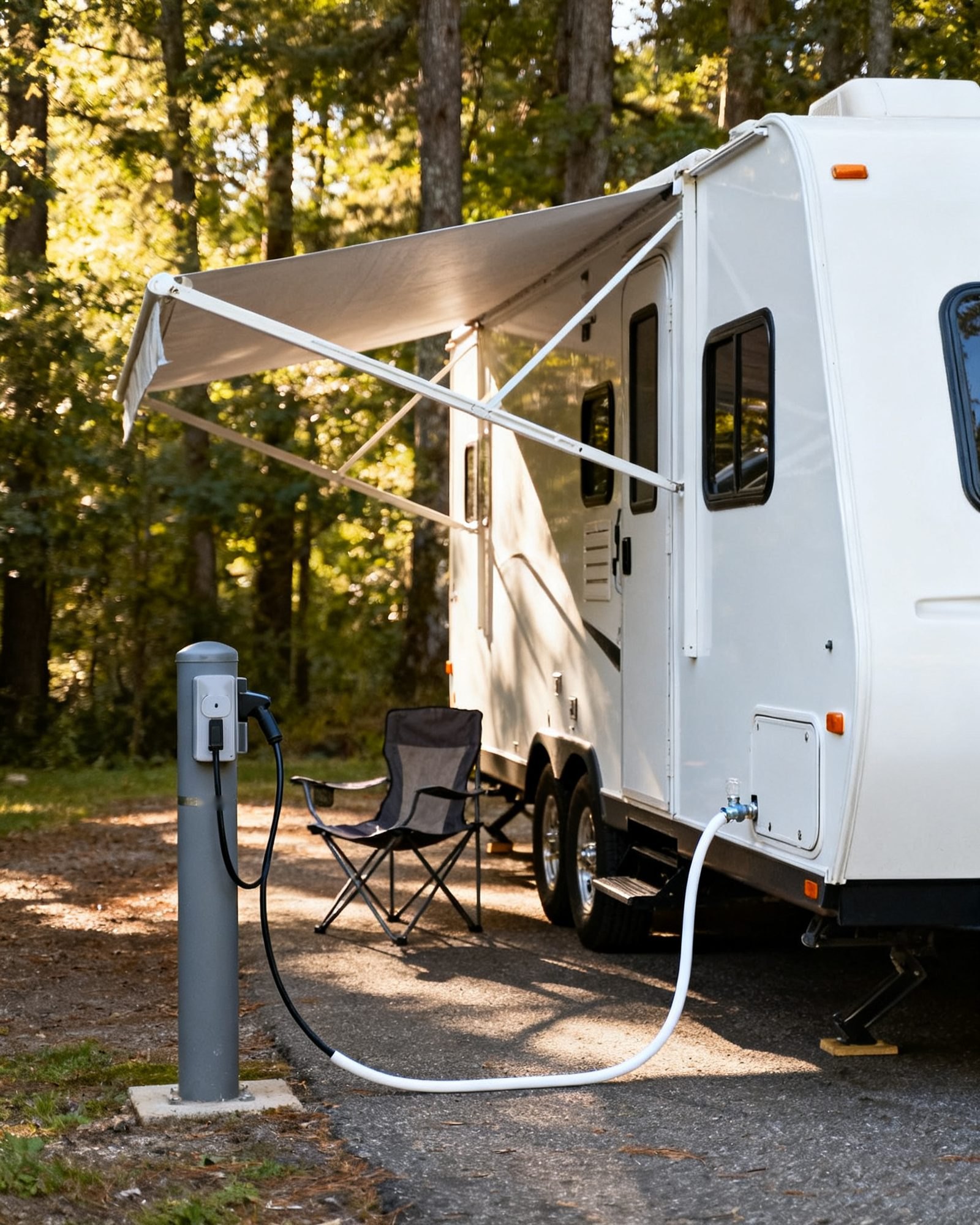
A used RV has three separate water tanks, and each one fails in its own way. The fresh tank holds the water you drink and wash with; the gray tank holds sink and shower waste; the black tank holds toilet waste. On a used RV, the black tank is where neglect shows up first, as hardened waste, a false tank reading or a smell that returns after every dump. The fix is not a stronger chemical. It is understanding how the tanks, valves and vents work, dumping in the right order, and using enough water.
The three tanks and what feeds them
| Tank | What goes in | Typical trouble on a used RV |
|---|---|---|
| Fresh | Water from a campground tap or your own fill | Old hose, no regulator, stale water, pump that will not prime |
| Gray | Sinks, shower, sometimes the galley | Grease and hair, slow drains, odor from the drain traps |
| Black | Toilet only | Solids mound, clogged valve, sensors that read full when empty |
Gray and black tanks usually drain through a shared outlet, each with its own valve; some RVs have a separate outlet for a second gray tank. The fresh tank has a fill port, a vent and a pickup line to the pump. A used RV may also have a black tank flush inlet; if it does, use it only with the black valve open and a hose kept for that job, never the drinking-water hose, and never leave it unattended.
The fresh-water side: hose, regulator, filter, pump
Use a hose made for drinking water, not a garden hose. A pressure regulator at the campground tap protects the RV’s plumbing from high pressure. A filter removes sediment and some taste. Before trusting the system, sanitize it: fill the fresh tank, add the sanitizer according to its label, run it through every faucet, let it sit, then drain and refill. The water heater must be full of water before its electric element or burner is switched on, or the element will burn out.
The pump should prime and hold pressure. If it runs constantly, look for a leak or a bad check valve. If it sputters, check the inlet strainer. Work on the pump’s wiring or the water heater’s gas side is a job for a qualified RV technician.
Dumping in the right order
At an RV dump station, the order matters. Put on gloves. Connect the sewer hose securely. Open the black valve first and let it drain. Then open the gray valve, which rinses the hose. Close both, disconnect, and rinse the hose and the area. On full hookups, keep the black valve closed until the tank is mostly full; a trickle left open lets solids pile up and liquid run off, which is how the mound forms.
Never dump gray water on the ground unless local rules allow it. Never leave the black valve open at a campsite. Never use the fresh-water hose for anything else.
Keeping the black tank working
Use enough water per flush to move waste to the tank. After dumping, add a few gallons of water back with the treatment you choose. Skip the harsh additives that claim to dissolve everything; they can damage seals and do not replace water. Paper goes in the tank only if it is made for RV toilets. A clogged valve or a broken gate valve is a repair, not a flushing problem; have a qualified RV technician handle the valve and any work on the tank fittings.
Sensors that lie and smells that return
Tank sensors are common failure points on used RVs. A black tank sensor that reads full after a dump is usually coated with residue. Cleaning it may mean a professional tank cleaning. A smell inside the RV often comes from a dry drain trap, a bad air admittance valve under a sink, or a vent pipe blocked by a nest. Check the roof vent and the traps before blaming the tank.
Water and winter
Water freezes at 32 °F and expands by about 9 percent, which splits pipes, fittings, valves and tanks. If the RV will sit through freezing weather, drain the fresh tank, water heater and lines, bypass the water heater, and either blow the lines out with low-pressure air or pump non-toxic RV antifreeze through every faucet and into the drain traps. Never put automotive antifreeze in an RV water system. The full sequence is in how to winterize and store an RV, including what to do in spring.
What goes wrong: clogs, smells and red flags
- The pyramid. Solids and paper pile up under the toilet because too little water was used. It blocks the valve and the sensors. The cure is water and time, not a stronger chemical.
- The open black valve. Leaving it open at a full-hookup site lets liquid drain away and solids stay behind. Keep it closed until the tank is mostly full.
- The wrong hose. A garden hose used for drinking water can leave a taste and worse. Keep a dedicated drinking-water hose.
- The missing regulator. High campground pressure can burst a fitting. Use a regulator at the tap.
- The dry trap. A drain trap that dries out lets tank odor into the living space. Pour water into unused drains.
- The neglected vent. A blocked roof vent pressurizes the tank and pushes odor back inside.
- The used-RV red flag. A strong smell, soft floor around the toilet, or a black tank that will not drain fully can mean a cracked tank or valve. Have it inspected before purchase.
A seasonal water checklist
A used RV’s water system benefits from a routine tied to the seasons. Before the first trip, sanitize the fresh tank, check the pump and the water heater, and test every faucet. During the season, dump in the right order, keep the black valve closed on hookups, and check the drain traps. Before storage, winterize or drain as the climate requires. The seasonal maintenance schedule for a used RV puts these tasks alongside the roof, tires and brakes so nothing is missed.
Water heater and plumbing safety
A water heater that has been sitting may have a tank full of scale or a failed anode. If it is a gas model, the burner and flue are a job for a qualified RV technician. Opening the pressure-relief valve releases hot water under pressure and can scald, so leave testing it to a technician unless the heater is off and cool. If you smell propane, put out flames, do not operate electrical switches, close the tank valve if it is safe, open doors, get everyone out, and have the system checked by a qualified RV technician before using it again.
Buying a used RV: what to check on the water system
Ask the seller to fill the fresh tank and run the pump. Watch for leaks under the sinks and around the water heater. Run the shower and the toilet. Check the gray and black tank valves; they should open and close smoothly. Look at the tank area for cracks, stains and repairs. A moisture meter on interior walls near the bathroom finds damp that cannot be seen. If the black tank has a strong smell or the sensors are unreliable, factor in a professional cleaning or sensor replacement. None of this replaces an independent RV inspector, chosen and paid by the buyer.
Dump station etiquette and rules
At a public dump station, be quick and clean. Wear gloves. Do not leave the hose on the ground. Rinse the area. Some states and campgrounds have rules about gray water; check locally. If the station charges a fee, have the method of payment ready. Never dump the black tank into a storm drain or onto the ground.
Storage between trips
If the RV sits, drain the fresh tank if freezing is possible, or keep it treated. Leave the black and gray tanks empty and the valves closed. Pour water into the traps. Rodents and drying seals are the usual storage damage; covers and regular checks prevent most of it. The winterizing guide covers the full storage routine.
When to call a qualified RV technician
Work on propane lines, the water heater’s gas burner, 120-volt wiring, the converter, the inverter or the generator is a job for a qualified RV technician. So is replacing a black tank valve if the fittings are cracked. The water system is simple in principle, but the repairs that involve gas, electricity or tank removal are not a first-time owner’s job.
Common questions
How often should I dump my RV black tank?
Dump when the tank is mostly full, not on a fixed schedule. A mostly full tank dumps more completely and leaves less residue. On full hookups, keep the valve closed between dumps.
Why does my RV black tank sensor always read full?
Residue on the sensor is the usual cause on a used RV. A professional tank cleaning often fixes it. If the sensor still misreads, replacement is the next step.
Can I dump gray water on the ground?
Only where local rules allow it. Many campgrounds and local rules prohibit it. Use the dump station or the sewer connection.
What is the right order to dump RV tanks?
Black first, then gray. The gray water rinses the hose. Close both valves, disconnect, and rinse the hose and the area.
How do I keep my RV fresh water tank clean?
Sanitize it before the season, use a drinking-water hose, and do not let water sit for long periods. Drain and refill if the RV has been idle.
Read next
RV Campgrounds and Hookups: Full Hookup to Boondocking
Full hookup, partial hookup or no hookup at all: how RV campgrounds and public-land camping work, what each site gives you and how to pick one.
Your First RV Trip: A Shakedown Checklist
Plan a first RV trip in a used RV with a shakedown close to home, a departure checklist, driving and parking tips, and the mistakes that catch new owners.
RV Maintenance Checklist: A Seasonal Schedule for a Used RV
A practical RV maintenance checklist for used motorhomes, campers and trailers: what to check before each trip, monthly, each spring and fall, and yearly.