How to Winterize an RV and Store It for the Cold Months
How to winterize an RV with antifreeze or compressed air, store it safely, and de-winterize in spring. Practical steps for used motorhomes and trailers.
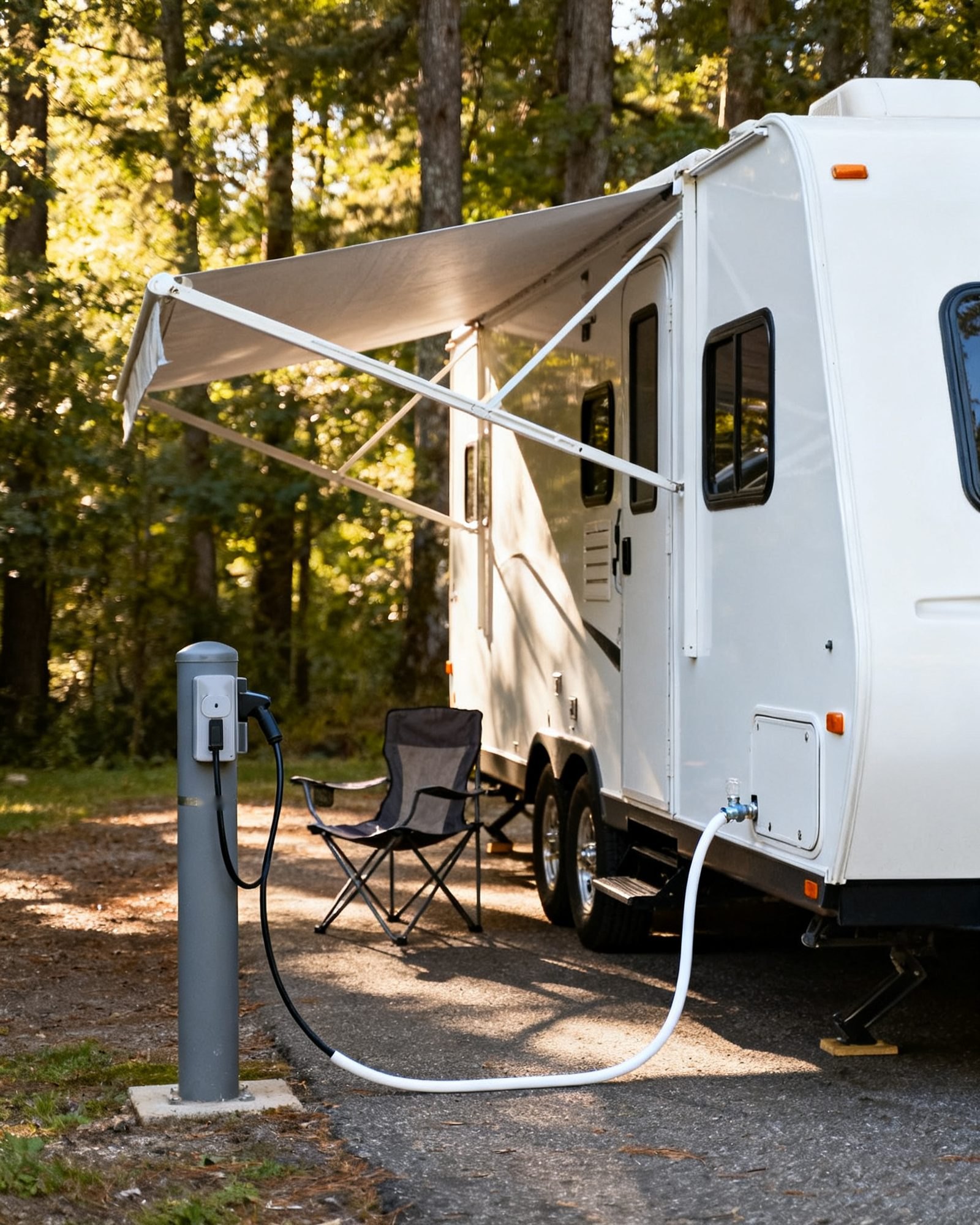
Freezing water is what damages an RV, not the cold itself. Water expands by about 9 percent as it freezes at 32 °F, and that expansion splits pipes, fittings, valves and tanks. Winterizing means getting all the water out of the fresh-water system, or replacing it with non-toxic RV antifreeze, before the first hard freeze. The same job protects the waste tanks, traps and toilet. Storage then decides how the RV comes back in spring: batteries, tires, seals and rodents cause most of the damage between trips.
Why water damage starts before the freeze
A single trapped cup of water in a low point, a water heater, a pump head or a toilet valve can crack a fitting. The leak may not show until spring, when the system is pressurized and water runs into a cabinet or floor. That is why draining is not enough on its own: low spots, the water heater and the pump need attention, and any line that cannot be blown clear needs antifreeze.
Two methods are common: compressed air to blow the lines out, or RV antifreeze pumped through every faucet. Some owners use both. Air alone leaves no antifreeze to flush out in spring, but it depends on a good compressor and a careful sequence. Antifreeze is more forgiving but must be the non-toxic propylene glycol type, usually pink, made for RV water systems. Never put automotive antifreeze in an RV water system.
The two winterizing methods compared
| Method | What it does | Best for | Watch out for |
|---|---|---|---|
| Compressed air | Blows water out of lines with low-pressure air | Owners who can reach every low point and drain valve | Water left in the pump, heater or a low trap; too much pressure can damage fittings |
| RV antifreeze | Pushes non-toxic pink fluid through every faucet and trap | Most trailers and motorhomes, especially where lines are hard to drain | Must reach every fixture, including the toilet and outside shower; not automotive antifreeze |
Whichever method is used, the water heater needs a bypass. A bypass kit lets the heater be drained and isolated so antifreeze does not fill it. The heater must be full of water before its electric element or burner is switched on, so never power it during winterizing. Work on the water heater’s burner or electrical element is a job for a qualified RV technician.
Step by step: draining and protecting the system
- Drain the fresh-water tank, the water heater and the low-point drains. Drain the heater only when it is switched off and cool, with the pressure relieved, or the water can scald. Open every faucet, hot and cold, and flush the toilet to clear the lines.
- Bypass the water heater and leave its drain plug or anode out for the winter.
- If using air, connect a low-pressure compressor through a blow-out plug at the city water inlet and open each faucet in turn until only air comes out. Do not exceed the pressure the system is rated for.
- If using antifreeze, use a hand pump or the RV’s own pump with a kit to draw pink fluid from a jug. Run each hot and cold faucet until pink comes out, then the toilet, the shower and any outside shower.
- Pour antifreeze into every drain trap, including the shower and any sink that is rarely used.
- Leave a little antifreeze in the toilet bowl to keep the seal wet, and follow the toilet maker’s instructions for its valve.
The waste tanks should be dumped and rinsed before winterizing. Black first, then gray, which rinses the hose. More detail on tank order and dumping is in RV water systems: fresh, gray and black tanks.
Batteries, propane and the 12-volt system
A battery left connected will drain over the winter, and a flat lead-acid battery can freeze and crack. Disconnect the coach and chassis batteries, or use a maintainer. Flooded lead-acid batteries need their water level checked and topped up with distilled water before storage. Lithium iron phosphate batteries have different charging needs and most must not be charged below freezing unless they have built-in heating. Work on the converter, inverter, generator or 120-volt wiring is a job for a qualified RV technician; the basics are covered in RV electrical basics: 30 amp vs 50 amp, batteries and generators.
Propane should be turned off at the tank or cylinder valve for storage. A DOT cylinder must be requalified 12 years after its date of manufacture and at set intervals after that; an out-of-date cylinder should not be refilled. Do not store spare cylinders inside the RV. If a propane smell is present, put out flames, do not operate electrical switches, close the tank valve if it is safe to do so, open doors, get everyone out, and have the system checked by a qualified RV technician before using it again. Leak testing, regulators, lines and appliances are technician work.
Storage choices and what each one demands
| Storage option | What it protects | What to check |
|---|---|---|
| At home, uncovered | Convenient for checks and charging | Local rules on parking an RV; sun on tires and seals; snow load on the roof |
| At home, covered | Roof and seals from sun and rain | Cover must breathe; a loose cover can rub the finish |
| Indoor or enclosed | Best protection from weather and rodents | Cost and access; ventilation; battery charging arrangements |
| Storage lot | Off-street and often fenced | Local rules; access for checks; security; whether power is available |
Check local rules before parking an RV at home: some towns and homeowner associations limit where and how long it can sit. In storage, the usual damage is rodents, flat batteries, sun on tires and drying seals. Covers, battery maintainers or disconnects, and regular checks prevent most of it. Tire makers’ advice varies, but common guidance is a yearly inspection once tires are 5 years old and replacement no later than 10 years from the date of manufacture, whatever the tread looks like. The DOT code on the sidewall ends in four digits giving week and year of manufacture.
Rodents, covers and the roof
Mice enter through small gaps around pipes, vents and the cabover. Seal obvious openings with mesh or sealant, remove food and paper, and check the interior regularly. A cover should fit and breathe; a tarp tied down tight can trap moisture. Before covering, inspect the roof and seam sealants, which dry out and crack with age and must be renewed. A roof can be walked on only where its maker says so. Look for bubbles, waves or ripples in the sidewall, which suggest delamination and water entry, and use a moisture meter on interior walls to find damp that cannot be seen.
Bringing it back in spring
De-winterizing is the reverse of winterizing, with checks added. Drain the antifreeze from the lines, flush the system with fresh water, and refill the water heater before switching on its electric element or burner. Install a new water filter if the RV has one. Check the tires for cracks and correct pressure, test the smoke, carbon monoxide and LP gas alarms and replace them by the date on the unit, and inspect the roof and seams again. Run the generator only with the CO alarm working and never with its exhaust blocked or near open windows; generator work is a job for a qualified RV technician.
A seasonal schedule keeps these jobs from stacking up. The RV maintenance schedule for a used RV sets out what to check month by month, including the items that matter most after storage.
What goes wrong: common winterizing mistakes
- Skipping the water heater bypass. Antifreeze fills the heater, or the heater is left full of water and splits. Drain it and leave the plug out.
- Missing a fixture. The outside shower, toilet valve and low-point drains are commonly forgotten. Run every faucet until pink appears.
- Using automotive antifreeze. It is toxic and will contaminate the water system. Use only non-toxic propylene glycol RV antifreeze.
- Leaving batteries connected. A flat battery can freeze and crack. Disconnect or maintain it.
- Sealing the RV too tightly. Moisture trapped inside causes mold. Ventilation matters even in storage.
- Forgetting the traps. A trap full of water can freeze and crack, and one left dry lets sewer gas in. Fill each with RV antifreeze.
- Powering the water heater dry. A dry electric element can burn out almost at once, and the heater can be damaged. Fill the heater before use.
- Ignoring local storage rules. A complaint can mean moving the RV in a hurry. Check before parking.
A short pre-storage checklist
- Dump and rinse black and gray tanks; close valves.
- Drain fresh tank, water heater and lines; bypass the heater.
- Blow lines out or pump RV antifreeze through every faucet, toilet and shower.
- Pour antifreeze into every trap; leave some in the toilet bowl.
- Disconnect or maintain batteries; check flooded battery water.
- Turn off propane at the tank or cylinder.
- Seal rodent entry points; remove food.
- Inspect roof and seams; cover with a breathing cover if used.
- Record the date and method so spring is predictable.
Common questions
Do I have to use RV antifreeze, or is compressed air enough?
Compressed air can clear the lines if every low point and fixture is drained, but any trapped water can still freeze. Many owners use air and then add non-toxic pink RV antifreeze to the traps and toilet. Never use automotive antifreeze in an RV water system.
How do I winterize a camper's water heater?
Drain the heater and use its bypass kit to isolate it so antifreeze does not fill it. Leave the drain plug or anode out for the winter. The heater must be full of water before its electric element or burner is switched on; burner and electrical work is a job for a qualified RV technician.
Can I leave the RV battery in place over winter?
Yes, if it is disconnected or on a maintainer so it does not drain flat. A flat lead-acid battery can freeze and crack. Flooded batteries need their water level checked and topped up with distilled water before storage.
What should I check before de-winterizing in spring?
Check tires for cracks and pressure, inspect the roof and seams, test the smoke, carbon monoxide and LP gas alarms, and replace them by the date on the unit. Flush the antifreeze from the lines and refill the water heater before switching it on.
Where can I store an RV, and do local rules matter?
Options include at home, under a cover, indoors or at a storage lot. Check local rules before parking an RV at home, since some towns and homeowner associations limit where and how long it can sit. In any storage, watch for rodents, flat batteries, sun on tires and drying seals.
Read next
RV Campgrounds and Hookups: Full Hookup to Boondocking
Full hookup, partial hookup or no hookup at all: how RV campgrounds and public-land camping work, what each site gives you and how to pick one.
Your First RV Trip: A Shakedown Checklist
Plan a first RV trip in a used RV with a shakedown close to home, a departure checklist, driving and parking tips, and the mistakes that catch new owners.
RV Maintenance Checklist: A Seasonal Schedule for a Used RV
A practical RV maintenance checklist for used motorhomes, campers and trailers: what to check before each trip, monthly, each spring and fall, and yearly.