Truck Campers: Matching a Used Camper to Your Pickup
How to match a used truck camper to your pickup: payload limits, tie-downs, jacks, handling changes and what to inspect before you buy a slide-in camper.
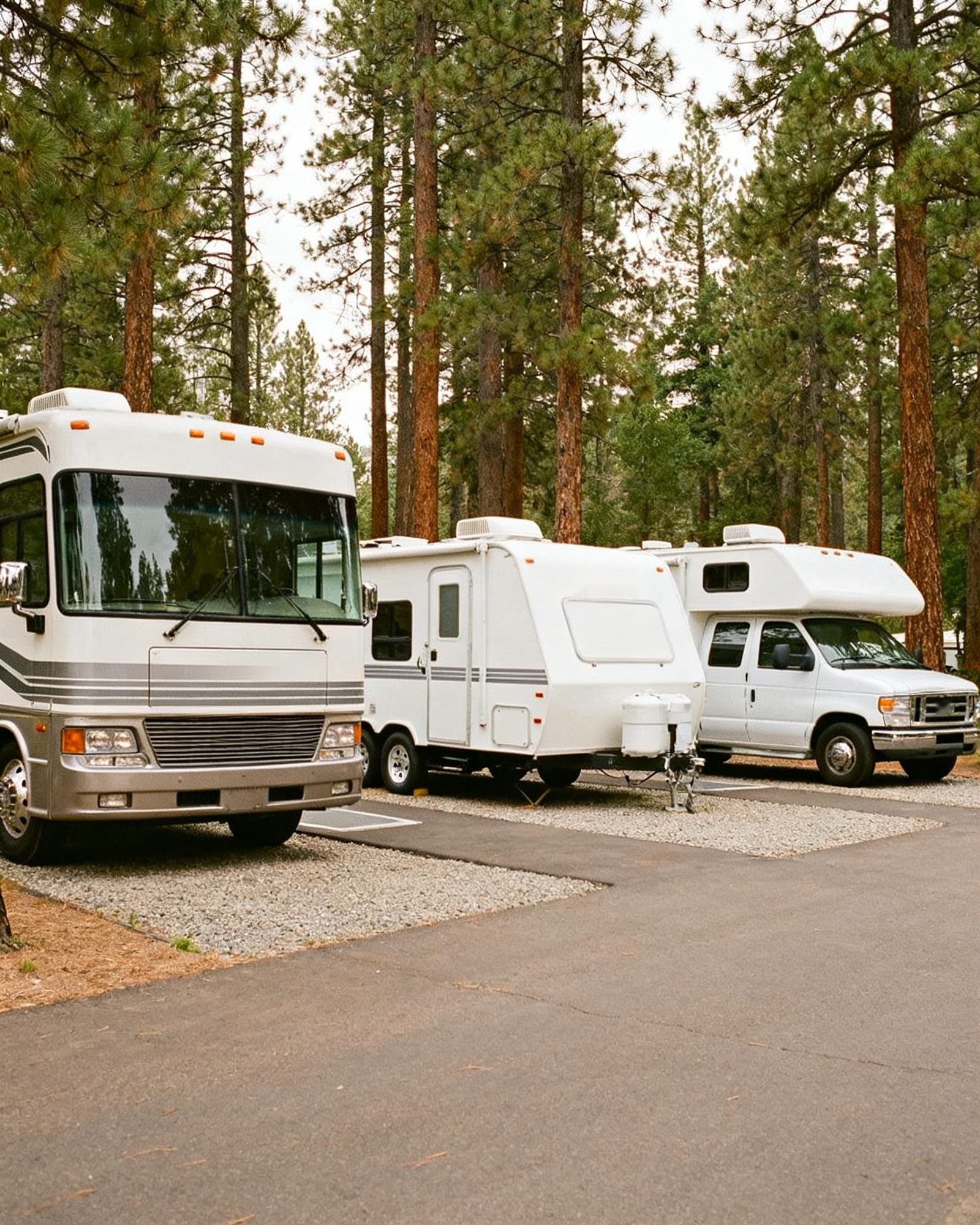
A truck camper is a camper unit that slides into the bed of a pickup truck and is held in place by tie-downs. It can be taken off so the truck can be used on its own. That flexibility is the appeal, but it also means the truck and the camper have to be matched carefully. The truck’s payload rating decides whether a given camper is safe to carry, and on a used camper the tie-downs, jacks and roof are where the problems usually show up.
What a truck camper is and who it suits
A truck camper is not a trailer and not a motorhome. It has no wheels of its own and no engine. It rides in the bed of a pickup, and the truck carries the whole load. Most have a cabover section that extends over the truck’s roof, giving a bed or storage area. Some are hard-sided with slide-outs; others have soft sides or a pop-up roof. They range from simple shells with a bed and a stove to fully equipped units with a wet bath, refrigerator and furnace.
Truck campers suit buyers who want a compact, go-anywhere unit without towing a trailer or driving a large motorhome. They can go where a trailer cannot, and the truck is useful on its own once the camper is off. They do not suit everyone: space is tight, the climb into a cabover bed is awkward for some, and the truck’s handling changes once the camper is loaded. For a broader look at how this type fits with motorhomes and towables, see RV types explained: Class A, B and C motorhomes and towables.
Payload is the number that decides everything
Every pickup has a payload rating on the tire and loading label on the driver’s door jamb. That figure is the most the truck can carry, including passengers, cargo, the hitch and the camper’s loaded weight. It is not the same as the truck’s towing capacity, and it is often lower than buyers expect.
A camper’s loaded weight is not the same as its dry weight. The camper’s own weight label may show an unloaded figure that excludes water, propane, batteries, gear and options added later. To know what a used camper actually weighs, put it on a public scale on the truck, fully loaded, by axle where possible; the only way to know actual weight is a public scale.
Reading the truck’s door-jamb label
The label lists the truck’s gross vehicle weight rating (GVWR), gross axle weight ratings (GAWR) for each axle, and the payload. The payload must cover:
- All passengers
- Cargo in the cab and bed
- The camper’s loaded weight, including water, propane, batteries and gear
- Tie-down hardware mounted on the truck
If the camper’s loaded weight plus passengers and gear exceeds the payload, the truck is overloaded. That affects braking, handling, tires and possibly insurance. Check with your insurer about coverage for a truck carrying a camper.
The camper’s own weight label
Look for the camper’s weight label, usually inside a cabinet or near the entry door. It shows the camper’s weight as built and may show cargo carrying capacity (CCC). Remember that options added later are often not included, and water weighs about 8.3 pounds per gallon, propane about 4.2 pounds per gallon. A full fresh water tank and two full propane cylinders add up quickly.
Tie-downs and jacks: the parts that fail
Tie-downs hold the camper to the truck. There are several systems: frame-mounted tie-downs that bolt to the truck’s frame, bed-mounted tie-downs that attach to the bed, and belly-band systems that wrap around the camper. Each has its own hardware, turnbuckles and attachment points. On a used camper, inspect every tie-down point for rust, cracks, elongation or makeshift repairs. Check that the turnbuckles are the correct type and are not bent. A camper that has been held on with improvised straps or chain is a red flag.
Jacks lift the camper on and off the truck. Most truck campers have four jacks, either manual or electric. Check that each jack operates smoothly through its full travel, that the mounts are not cracked or bent, and that the wiring on electric jacks is not chafed. A jack that binds or a mount that has been welded back together suggests the camper has been dropped or overloaded.
How a camper changes the truck’s handling
A truck camper raises the center of gravity and puts a heavy load high up in the bed. That changes steering, braking and cornering. The truck may feel top-heavy, lean more in turns and take longer to stop. Tire pressure must be set for the actual load, from the tire maker’s load and inflation table or the vehicle’s tire placard, measured cold. Suspension aids such as helper springs, air bags or a rear sway bar can level the truck and reduce lean, but they do not raise the truck’s weight ratings. Four-wheel drive adds weight, cost and parts to maintain; it does not raise the vehicle’s weight ratings. For off-road-oriented units, see used 4x4 motorhomes and off-road campers in the USA.
If you also tow a trailer behind the truck camper, the combined weight and the hitch rating matter. For trailer towing basics, see towing a travel trailer: weight ratings, hitches, brakes and sway.
What to inspect on a used truck camper
Water damage and delamination
Water damage is among the most common and most expensive defects in used RVs. On a truck camper, check the cabover section carefully: the front and side seams, the window frames and the area where the cabover meets the main body. Look for soft spots in the floor, walls and ceiling, stains, sagging, rot around windows, roof vents and corners, and a musty smell. Delamination is the outer fiberglass skin separating from the wall behind it, showing as bubbles, waves or ripples in the sidewall, and is usually a sign that water has got in. A moisture meter on interior walls finds damp that cannot be seen. Roof and seam sealants dry out and crack with age and must be inspected and renewed. Common roof membranes are EPDM (rubber), TPO, fiberglass and aluminium; a roof can be walked on only where its maker says so.
The camper’s systems
Test the water system, the water heater, the furnace, the refrigerator and the stove. A water heater must be full of water before its electric element or burner is switched on. Propane system work, including leak testing, regulators, lines and appliances, is a job for a qualified RV technician. If you smell propane, put out flames, do not operate electrical switches, close the tank valve if it is safe to do so, open doors, get everyone out, and have the system checked by a qualified RV technician before using it again. Truck campers commonly carry removable DOT cylinders in an outside compartment. Since 2002, DOT propane cylinders of 4 to 40 pounds must have an overfill prevention device (OPD) to be refilled, recognised by a triangle-shaped valve handwheel. A DOT cylinder must be requalified 12 years after its date of manufacture and at set intervals after that; an out-of-date cylinder should not be refilled.
Electrical work on 120-volt or 240-volt wiring, the converter, inverter or generator is a job for a qualified RV technician. Check that the smoke, carbon monoxide and LP gas alarms are present and test them; replace them by the date on the unit.
Tires and the truck side
The camper itself has no tires, but the truck’s tires carry the load. Check the DOT code on the sidewall: it ends in four digits giving week and year of manufacture, so 2419 means the 24th week of 2019. RV tires often age out before the tread wears out; common guidance is a yearly inspection once tires are 5 years old and replacement no later than 10 years from the date of manufacture, whatever the tread looks like. Inflate to the pressure for the actual load, measured cold.
Paperwork and title
A slide-in camper rides on a truck rather than being a road vehicle of its own. Depending on the state it may have its own title or registration, or none, and it may carry a serial number rather than a 17-character VIN; check your state DMV. Make sure whatever number the camper carries matches the bill of sale and any title. If the truck is part of the sale, check its VIN on the title, the registration and the federal certification label; they must all match and show no sign of alteration. The NHTSA recall lookup by VIN covers the truck; for the camper, ask its manufacturer about recalls if it is still in business. NMVTIS is a federal database of title brands, odometer readings and total-loss records; reports come from NMVTIS-approved data providers. The National Insurance Crime Bureau’s free VINCheck shows theft and total-loss records reported by participating insurers. Title brands, whose names vary by state, include salvage, rebuilt or reconstructed, flood and junk. A branded title affects financing, insurance and resale.
What goes wrong: common mistakes and red flags
- Buying on dry weight alone. The camper’s dry weight excludes water, propane, batteries and gear. A camper that fits the payload on paper may be over once loaded.
- Ignoring the door-jamb label. The payload on the label is the maker’s limit, not a suggestion. Overloading hurts braking and handling, and can complicate an insurance claim - check with your insurer.
- Skipping the tie-down inspection. Rusted, cracked or improvised tie-downs are a sign of neglect or a past accident. Replace damaged hardware before using the camper.
- Not testing the jacks under load. A jack that works empty may bind with the camper’s weight. Test each jack through its full travel.
- Missing water damage in the cabover. The cabover is a common leak point. Soft spots, stains and delamination there are expensive to fix.
- Assuming the truck’s towing capacity is the payload. They are different ratings. A truck that tows a heavy trailer may still have a low payload.
- Buying without a bill of sale. A bill of sale records buyer, seller, date, the sale amount, VIN, year, make and model, and “as is” where there is no warranty; some states have their own form. A private sale is usually as-is, with no warranty.
- Paying before seeing the camper and the title. Vehicle-sale scams follow a pattern the FTC and FBI warn about: a listing far below comparable RVs, a seller who cannot meet, payment by wire transfer, gift cards or an “escrow” or shipping service the seller chooses, and pressure to pay before seeing the RV and the title. Meet at the buyer’s bank, check the title and the seller’s ID, pay by cashier’s check or a transfer made in person, and sign the title and bill of sale at the same time.
Matching a camper to your truck: a checklist
| Check | What to look for | Why it matters |
|---|---|---|
| Truck payload | Door-jamb label; payload must cover passengers, cargo and camper’s loaded weight | Overloading affects safety, handling and insurance |
| Camper loaded weight | Public scale with water, propane and gear | Dry weight is not the real weight |
| Tie-downs | Frame-mounted or bed-mounted; no rust, cracks or makeshift repairs | Failed tie-downs can let the camper shift or come off |
| Jacks | Smooth operation through full travel; mounts not cracked or welded | A binding jack or cracked mount suggests damage |
| Cabover and roof | No soft spots, stains, delamination or musty smell; sealant intact | Water damage is common and expensive |
| Appliances and propane | Test stove, furnace, water heater; check cylinder dates and OPD | Propane work needs a qualified RV technician |
| Tires on the truck | DOT date code; inflate for actual load | Tires age out before tread wears out |
| Title and serial number | Camper’s number matches the paperwork; truck’s VIN matches its title and label; no brands | A branded title affects financing and resale |
Truck campers reward careful matching. Start with the truck’s payload, weigh the camper loaded, inspect the tie-downs and jacks, and look hard at the cabover for water damage. If the numbers work and the camper is dry, a used truck camper can be a practical way to carry your accommodation with you.
Common questions
How do I know if a truck camper will fit my pickup?
Check the payload rating on the tire and loading label on your truck's driver's door jamb. The camper's loaded weight (with water, propane, batteries and gear) plus passengers, cargo and the tie-down hardware must not exceed that payload. Also check the camper's footprint against your truck bed length and width, and confirm the tie-down system fits your truck.
What are the most common problems with used truck campers?
Water damage in the cabover and around roof seams is common and expensive. Worn or improvised tie-downs, binding jacks and cracked jack mounts are also frequent. Test every appliance and check the propane cylinder dates before buying.
Do I need a special license to drive a truck with a camper?
The federal commercial driver's license does not apply to personal-use RVs, but some states require a special non-commercial license or endorsement for heavy vehicles or combinations. A GVWR over 26,000 pounds is a common threshold, but each state sets its own rules. Check your state DMV.
Can I tow a trailer behind a truck camper?
A truck carrying a camper can tow a trailer only within the truck's gross combined weight rating (GCWR) and the hitch rating. The camper's loaded weight and the trailer's tongue weight both count toward the truck's payload. Check every rating, use a hitch rated for the load, and weigh the loaded rig at a public scale.
How often should truck camper tie-downs be inspected?
Inspect tie-downs before every trip and at least once a year. Look for rust, cracks, bent turnbuckles and loose fasteners. Replace any damaged hardware before using the camper.
Read next
Used 4x4 Motorhomes and Off-Road Campers in the USA
Compare used 4x4 motorhome types: camper vans, 4x4 Class C, truck campers and expedition trucks. Learn what four-wheel drive adds and what to inspect.
Used Class B RVs and Camper Vans: What to Check
A practical guide to buying a used Class B RV or camper van: how they are built, who they suit, wet baths, tank sizes, home conversions and what to inspect.
Used Class C Motorhomes: Who They Suit and What to Check
How a used Class C motorhome is built, who it suits, how it drives, and what to inspect - especially the cabover, the classic spot for water leaks.