Used Class C Motorhomes: Who They Suit and What to Check
How a used Class C motorhome is built, who it suits, how it drives, and what to inspect - especially the cabover, the classic spot for water leaks.
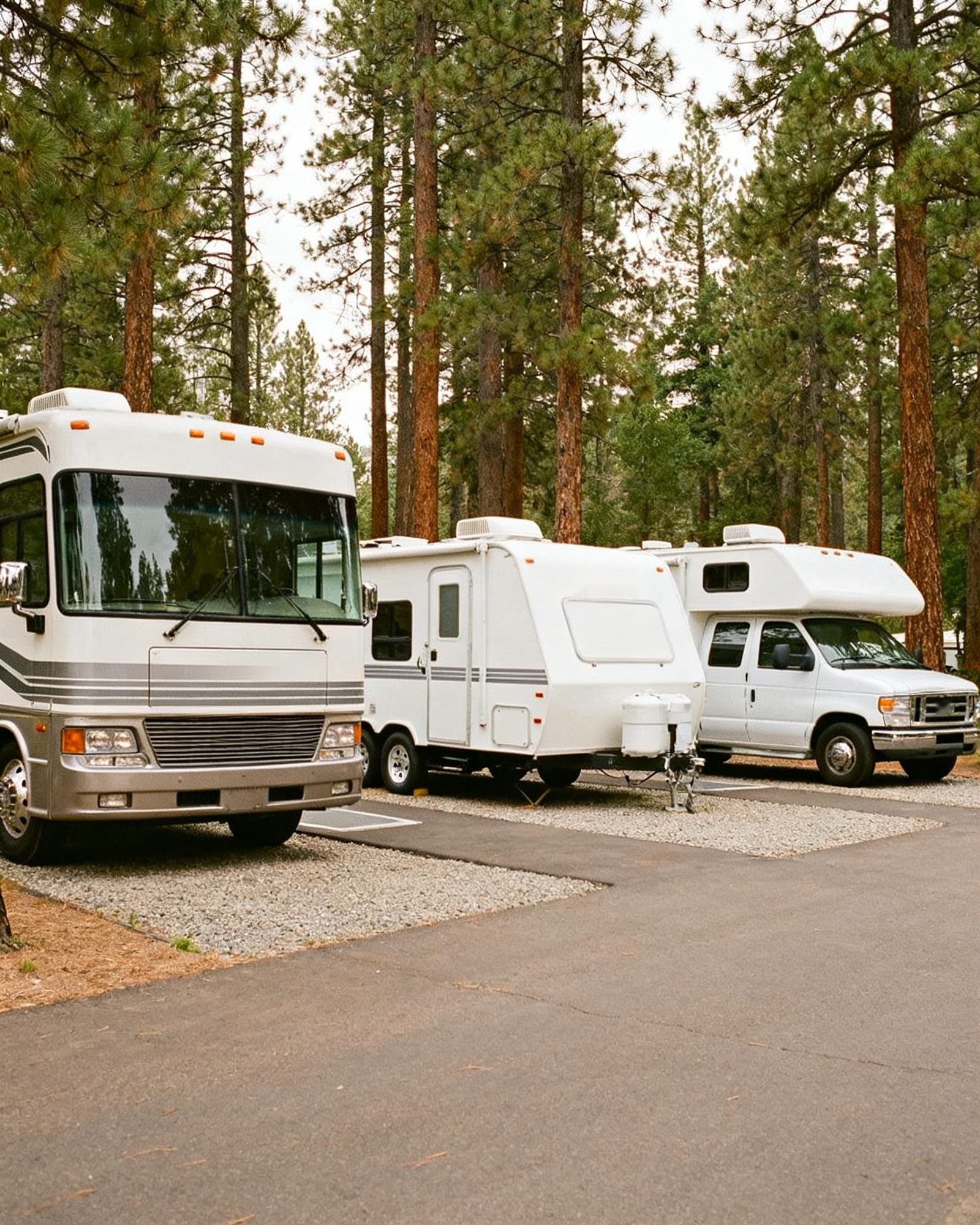
A used Class C motorhome is a motorized RV built on a cutaway van or truck chassis: the original cab and doors are kept, and a living body sits behind and above them, usually with a bed or storage in the over-cab section called the cabover. Most Class C motorhomes run roughly 20 to 35 feet long, which makes them easier to drive and park than a Class A. They suit first-time motorhome owners, couples and small families who want one vehicle to drive and camp in, and who want a familiar van cab rather than a bus-style cockpit. The main thing to inspect on a used one is the cabover and the seams around it, because that is where water gets in.
How a Class C is built, and why the cab matters
The chassis is a cutaway van or truck chassis - the front of a production van or truck, supplied by the chassis maker with no body behind the cab. The RV maker adds the living body behind the cab. Because the cab, windshield, dashboard, pedals and driving position are the ones the chassis maker designed, a Class C drives much like a large van. That is the practical difference from a Class A, which has a flat front, a large windshield and a purpose-built motorhome chassis or a commercial truck or bus chassis. For a buyer moving up from a van or pickup, the Class C cab is familiar; for someone comparing the two, see used Class A motorhomes: gas vs diesel pushers for the other side of the decision.
The body is usually aluminium or wood framing with laminated fiberglass or aluminium skin. The cabover - the sleeping or storage area that projects over the cab - is a structural box joined to the main body, and that joint is a seam like any other. Roof and seam sealants dry out and crack with age, so the cabover front window, the seam where the cabover meets the cab roof, and the side seams all need inspection on any used Class C.
What the cabover is used for
Most Class C motorhomes have a bed or storage over the cab. A cabover bed adds sleeping space without lengthening the RV, which is why families like the layout. Some cabovers are storage only. Either way, the cabover is outside the main box of the living area, so it takes weather on more faces than a flat wall does.
Class C vs Class A: the practical differences
| Point | Class C motorhome | Class A motorhome |
|---|---|---|
| Chassis | Cutaway van or truck chassis; original cab kept | Purpose-built motorhome chassis or commercial truck/bus chassis |
| Typical length | Roughly 20 to 35 feet | Roughly 25 to 45 feet |
| Driving position | Familiar van cab, doors and dashboard | Flat front, large windshield, bus-style cockpit |
| Sleeping space | Often a bed or storage over the cab (cabover) | Living space within the main box |
| Engine position | Usually front, in the van or truck nose | Gas usually front; diesel usually rear (diesel pusher) |
| Main used-buy check | Cabover and its seams, plus the usual water and roof checks | Roof, slide-outs, basement compartments, chassis and drivetrain |
A Class C is not automatically cheaper to run or easier to own than a Class A of similar length, but it is usually narrower in feel from the driver’s seat and easier to place in a lane and a campsite. The trade is living space: a Class A of the same length puts more of its length into the living area because it does not have a van nose. The full range of motorized and towable types is set out in RV types explained: Class A, B and C motorhomes and towables.
The Super C, and the smaller end of the class
A Super C is built on a heavier medium-duty truck chassis, often with a diesel engine, and is larger and heavier than a standard Class C. It suits a buyer who wants more towing capacity and a heavier chassis, and who accepts the size and weight that come with it. Check the weight ratings on any Super C: GVWR, GCWR, GAWR and the cargo carrying capacity label, usually inside a cabinet or near the entry door. A heavier chassis does not mean unlimited payload.
At the other end, compact Class C motorhomes and the units marketed as “Class B+” sit between a camper van and a full Class C. “Class B+” is a marketing term, not an official class - usually a small motorhome on a cutaway van chassis without a cabover bunk. If size is the priority, compare these in small used motorhomes: compact Class C, B+ and camper vans.
What to check on a used Class C
Work through the structure first, then the systems, then the paperwork.
The cabover and the seams
- Look at the cabover from the ground and from a ladder: bubbles, waves or ripples in the sidewall mean delamination, the outer fiberglass skin separating from the wall behind it, and usually mean water has got in.
- Check the front window of the cabover and the seam where the cabover meets the cab roof. Sealant that is cracked, lifted or missing is a red flag.
- Press on the cabover ceiling and walls inside for soft spots, and look for stains, sagging and a musty smell.
- Run a moisture meter on interior walls; it finds damp that cannot be seen.
- Check the corners, roof vents, windows and slide-out seals as well. Water damage is among the most common and most expensive defects in used RVs, and the cabover is a classic place for it. The full inspection routine is in spotting water damage and delamination in a used RV.
Roof, body and slide-outs
- Identify the roof membrane - EPDM (rubber), TPO, fiberglass or aluminium - and walk on it only where the maker says so.
- Check the roof and all seam sealants; they dry out and crack with age and must be renewed.
- Each slide-out adds weight, a mechanism and rubber seals to maintain. Operate every slide and inspect its seals.
Chassis, cab and drivetrain
- The cab is the chassis maker’s, so check it like a used van or truck: tires, brakes, steering, suspension, fluid leaks and the condition of the cab interior.
- Tires often age out before the tread wears out. The DOT code ends in four digits giving week and year of manufacture - 2419 means the 24th week of 2019. Common guidance is a yearly inspection once tires are 5 years old and replacement no later than 10 years from the date of manufacture, whatever the tread looks like.
- On a motorhome, a lab analysis of engine oil, coolant and transmission fluid can be added to an inspection.
- An independent RV inspector, chosen and paid by the buyer, examines the RV before purchase. Use one.
Systems and paperwork
- Test the smoke, carbon monoxide and LP gas alarms, and check the date on each unit.
- Propane, 120-volt and 240-volt electrical and generator work is a job for a qualified RV technician - have those systems checked, not repaired yourself.
- Check the VIN on the title, the registration and the federal certification label; they must all match and show no sign of alteration. A motorhome can have safety recalls from both the chassis maker and the living-area builder, so run the NHTSA recall lookup by VIN.
- Check the title for brands such as salvage, rebuilt, flood or junk, and confirm any lien is released before ownership passes.
What goes wrong, and how to avoid it
The classic used Class C failure is a cabover leak that has been cosmetically covered. Fresh sealant over a damp seam, new interior panels and a strong smell of air freshener are all reasons to slow down. Water trapped in the cabover structure leads to rot, sagging and delamination, and repairs are extensive. If a moisture meter or an inspector finds damp, treat the price as a repair estimate, not a bargain.
Other common mistakes:
- Buying on the floor plan alone. The layout matters, but structure and water damage decide what the RV will cost to own.
- Skipping the weight check. The only way to know actual weight is a public scale: weigh fully loaded, by axle where possible. A Class C can have little cargo carrying capacity left once fresh water, propane, passengers and gear are aboard.
- Ignoring the chassis side. A sound living area on a worn-out van chassis is still a worn-out vehicle.
- Trusting a verbal history. A private sale is usually as-is, with no warranty, and there is no general right to cancel a signed vehicle purchase afterwards.
- Paying before seeing the RV and the title. Vehicle-sale scams follow a pattern the FTC and FBI warn about: a listing far below comparable RVs, a seller who cannot meet, payment by wire transfer or gift cards, and pressure to pay before inspection. Meet at the buyer’s bank, check the title and the seller’s ID, and sign the title and bill of sale at the same time.
A Class C suits a buyer who wants a familiar cab, sleeping space over the cab and a motorhome that is easier to handle than a Class A - provided the cabover and the seams pass inspection.
Common questions
What is a Class C RV?
A Class C motorhome is built on a cutaway van or truck chassis, keeping the original cab and adding a living body behind it, usually with a bed or storage over the cab. Most are roughly 20 to 35 feet long. It is a motorized RV with its own engine and drivetrain.
What is a Super C motorhome?
A Super C is built on a heavier medium-duty truck chassis, often with a diesel engine, and is larger and heavier than a standard Class C. It suits buyers who want a heavier chassis and more towing capacity, and who accept the size and weight that come with it.
How do I check a Class C cabover for leaks?
Look for bubbles, waves or ripples in the cabover sidewall, which mean delamination and usually water intrusion. Check the cabover front window and the seam where it meets the cab roof for cracked or missing sealant, press inside for soft spots, and run a moisture meter on the interior walls.
Is a Class C easier to drive than a Class A?
A Class C keeps the chassis maker's cab, doors, dashboard and driving position, so it drives much like a large van. A Class A has a flat front, a large windshield and a bus-style cockpit. Many buyers find the Class C cab more familiar, but both need practice at their size.
What should I inspect on a used Class C before buying?
Structure first: the cabover, roof, seams, corners and slide-out seals, using a moisture meter. Then the chassis and tires, including the DOT date code. Then the alarms, propane and electrical systems, which a qualified RV technician should check. Finally the VIN, recalls, title brands and lien release.
Read next
Used 4x4 Motorhomes and Off-Road Campers in the USA
Compare used 4x4 motorhome types: camper vans, 4x4 Class C, truck campers and expedition trucks. Learn what four-wheel drive adds and what to inspect.
Used Class B RVs and Camper Vans: What to Check
A practical guide to buying a used Class B RV or camper van: how they are built, who they suit, wet baths, tank sizes, home conversions and what to inspect.
Used Class A Motorhomes: Gas vs Diesel Pushers
Compare used Class A motorhomes: gas front-engine vs diesel pusher. Learn how each is built, how it drives, what it tows, and what to inspect before you buy.