Used 4x4 Motorhomes and Off-Road Campers in the USA
Compare used 4x4 motorhome types: camper vans, 4x4 Class C, truck campers and expedition trucks. Learn what four-wheel drive adds and what to inspect.
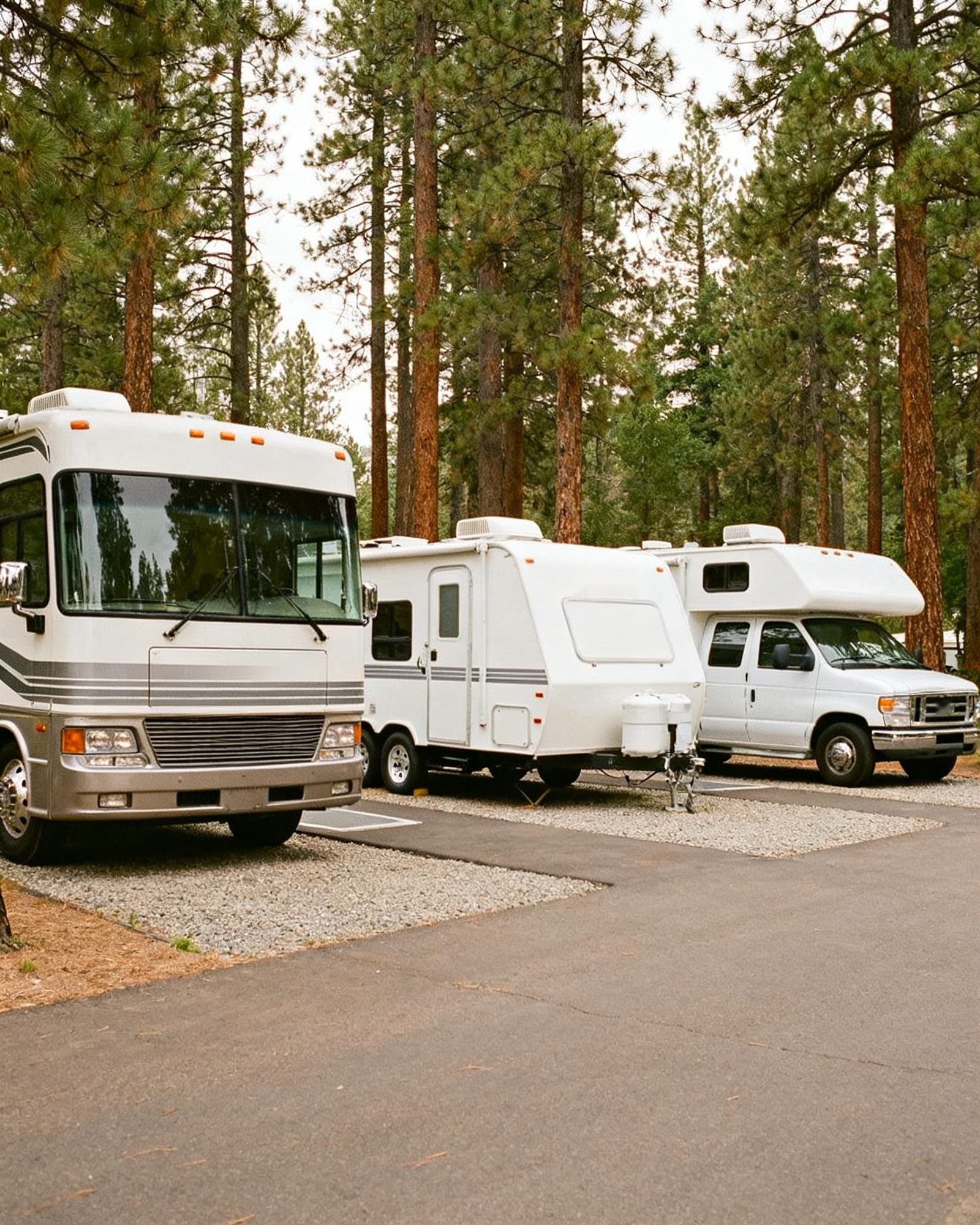
A used 4x4 motorhome is not one vehicle type but several: a four-wheel-drive camper van, a 4x4 Class C, a truck camper on a four-wheel-drive pickup, or a heavier expedition truck. Four-wheel drive changes how the vehicle is built, what it weighs and what you inspect before buying. It does not raise any weight rating, and it does not make a large RV suitable for rough ground. The sections below cover how each type is constructed, who it suits, how it is driven, and what to check on a used example.
Four-wheel drive: what it adds and what it does not
Four-wheel drive sends power to all four wheels. Some systems are selectable, with a low range for slow, steep work; others are all-wheel drive with no low range, so ask which one the vehicle has. Either helps on unpaved roads, gravel, mud, sand and snow. It does not change the vehicle’s GVWR, GAWR or GCWR, and it does not increase ground clearance by itself. Clearance comes from the chassis, the tires and any suspension work, and added lift changes handling and driveline angles.
Four-wheel drive adds weight, cost and parts to maintain: a transfer case, a front differential, a front driveshaft and extra seals. On a used RV, those are more places for wear, leaks and rust. It also adds height, which matters for roof clearance and for getting in and out.
Who each type suits
| Type | How it is built | Who it suits | How it is driven |
|---|---|---|---|
| 4x4 camper van | Class B body inside a full-size van, usually with a raised roof, on a four-wheel-drive van chassis | One or two people who want a vehicle that fits normal roads and tracks | Driven from the cab; roughly 17 to 24 feet long |
| 4x4 Class C | Cutaway van or truck chassis with the original cab and a living body behind, often with a cabover bed | Couples or small families wanting more space and a fixed bed | Driven; roughly 20 to 35 feet long, heavier with four-wheel drive |
| Truck camper on a 4x4 pickup | A camper unit that slides into the pickup bed and is held by tie-downs | Buyers who want the truck to work on its own when the camper is off | Driven; the camper comes off, the truck stays |
| Expedition truck | A heavy truck chassis with a purpose-built living box, sometimes imported | Buyers planning long off-pavement trips and able to handle a heavy vehicle | Driven; larger and heavier than the others |
A 4x4 camper van belongs to the smallest motorhome class and is the easiest to place on a narrow track. Many have a wet bath; some have no bathroom. For a full comparison of van layouts, see Class B RVs and camper vans: buying one used. If you want a compact motorhome that is not a full van, small used motorhomes: compact Class C, B+ and camper vans covers the middle ground.
A truck camper is the only type here that separates from its drive vehicle. That means the pickup’s payload on the tire and loading label must cover passengers, cargo, tie-downs and the camper’s loaded weight. Four-wheel drive does not change that figure. Truck campers: matching a used camper to your pickup explains the matching process.
What to inspect on a used 4x4 RV
Inspect a four-wheel-drive RV in the same order as any used RV, then add the drivetrain and underbody. Water damage is among the most common and most expensive defects, so start with the living area: soft spots in floors, walls and ceiling, stains, sagging, rot around windows, roof vents, the cabover, slide-outs and corners, and a musty smell. Use a moisture meter on interior walls to find damp that cannot be seen. Check the roof and seam sealants, which dry out and crack with age.
Then get under the vehicle. Look for rust on the frame, the floor supports, the axle housings and the transfer case. Check the front and rear driveshafts for play and torn boots. Look for oil weeping at the differential covers and the transfer case seals. On a lifted vehicle, check the springs, shocks, brake lines and wiring for strain or rubbing. Aftermarket bumpers, racks and skid plates can hide damage or poor welds.
Tires matter more on a four-wheel-drive RV because they are often replaced with larger or more aggressive sizes, and a replacement must still carry the load the vehicle’s tire placard calls for. Read the DOT code on the sidewall: the last four digits give week and year of manufacture, so 2419 means the 24th week of 2019. RV tires often age out before the tread wears out; common guidance is a yearly inspection once tires are 5 years old and replacement no later than 10 years from the date of manufacture. Inflate to the pressure for the actual load, measured cold.
Weigh the vehicle fully loaded at a public scale, by axle where possible. Compare the result with the GVWR and GAWR on the labels. Four-wheel drive adds weight, so a converted or modified RV may be closer to its ratings than the seller suggests.
Paperwork and history
A 4x4 conversion or an imported expedition truck can complicate the title. The VIN on the title, the registration and the federal certification label must match and show no sign of alteration. A motorhome can have safety recalls from both the chassis maker and the living-area builder; the NHTSA recall lookup by VIN shows open safety recalls. Check the title for brands such as salvage, rebuilt, flood or junk, which affect financing, insurance and resale. RV title transfer and paperwork when buying used walks through the lien release, bill of sale and odometer disclosure.
Imported 4x4 campers and the 25-year rule
Some expedition trucks and four-wheel-drive campers are imported rather than built for the US market. NHTSA allows a vehicle not built to US federal safety standards to be imported once it is at least 25 years old, counted from its month and year of manufacture. EPA emissions rules apply separately. Check with both agencies and a licensed customs broker before buying an imported vehicle, and confirm the paperwork is complete in your state.
An imported vehicle may have a different VIN format, metric gauges, non-US electrical fittings and propane hardware that does not match US practice. Propane system work, including leak testing, regulators, lines and appliances, is a job for a qualified RV technician. The same applies to 120-volt or 240-volt wiring, the converter, inverter or generator.
What goes wrong with used 4x4 RVs
The common mistakes fall into a few groups.
- Assuming four-wheel drive means off-road capable. A long, heavy Class C on a four-wheel-drive chassis still has limited clearance and a high center of gravity. Check the actual height, including roof air conditioners and antennas, and keep it written where the driver can see it.
- Ignoring weight ratings after a conversion. Added bumpers, racks, larger tires and a lift all add weight. The GVWR and GAWR are set by the maker and do not change. A vehicle can be over its rear axle rating before any water or gear is loaded.
- Missing rust under added parts. Skid plates, sliders and fender flares trap dirt and moisture. Rust on a frame or floor support is expensive to repair and can be structural.
- Buying a modified drivetrain with no records. A lifted or re-geared vehicle may have altered driveshaft angles, worn joints or a transfer case that was never serviced. Ask for maintenance records and have an independent RV inspector examine the vehicle before purchase.
- Overlooking the living-area defects. Four-wheel-drive buyers often focus on the chassis and miss water damage in the cabover, slide-outs and corners. A 4x4 camper van with a leaking roof is still a leaking camper van.
- Skipping the title check. A branded title, an unreleased lien or a VIN that does not match the paperwork can stop the sale or cost you later. A private sale is usually as-is, with no warranty, and there is no general right to cancel a signed vehicle purchase afterwards.
- Paying before seeing the RV and the title. Vehicle-sale scams follow a pattern the FTC and FBI warn about: a listing far below comparable RVs, a seller who cannot meet, payment by wire transfer or gift cards, and pressure to pay before inspection. Meet at the buyer’s bank, check the title and the seller’s ID, and sign the title and bill of sale at the same time.
Rules for titling, registration, trailer brakes and special licenses vary by state. A GVWR over 26,000 pounds is a common threshold for a non-commercial license or endorsement, but each state sets its own, so check your state DMV. For coverage, check with your insurer; for a loan, check with your lender.
Common questions
What is a 4x4 motorhome?
A 4x4 motorhome is a motorized RV built on a four-wheel-drive chassis. It can be a camper van (Class B), a Class C, or a truck camper on a four-wheel-drive pickup. Four-wheel drive helps on unpaved roads but does not increase the vehicle's weight ratings or clearance by itself.
Can I drive a 4x4 motorhome off-road?
Four-wheel drive helps on gravel, mud, sand and snow, but most 4x4 motorhomes are heavy and have limited clearance. Check the actual height and the weight ratings, and keep to roads suited to the vehicle. A long Class C on a four-wheel-drive chassis is not a rock crawler.
What should I check on a used 4x4 camper van?
Check for water damage in the living area, then inspect the underbody for rust, the driveshafts and transfer case for play and leaks, and the tires for age using the DOT code. Weigh it fully loaded at a public scale and compare with the GVWR and GAWR labels. Have an independent RV inspector examine it before purchase.
Are imported 4x4 campers legal in the US?
NHTSA allows a vehicle not built to US federal safety standards to be imported once it is at least 25 years old, counted from its month and year of manufacture. EPA emissions rules apply separately. Check with both agencies and a licensed customs broker, and confirm the paperwork with your state DMV.
Does four-wheel drive increase an RV's payload?
No. Four-wheel drive adds weight and parts to maintain, but the GVWR, GAWR and payload are set by the manufacturer and do not change. On a truck camper, the pickup's payload must still cover passengers, cargo, tie-downs and the camper's loaded weight.
Read next
Used Class B RVs and Camper Vans: What to Check
A practical guide to buying a used Class B RV or camper van: how they are built, who they suit, wet baths, tank sizes, home conversions and what to inspect.
Used Class C Motorhomes: Who They Suit and What to Check
How a used Class C motorhome is built, who it suits, how it drives, and what to inspect - especially the cabover, the classic spot for water leaks.
Used Class A Motorhomes: Gas vs Diesel Pushers
Compare used Class A motorhomes: gas front-engine vs diesel pusher. Learn how each is built, how it drives, what it tows, and what to inspect before you buy.