Used Class A Motorhomes: Gas vs Diesel Pushers
Compare used Class A motorhomes: gas front-engine vs diesel pusher. Learn how each is built, how it drives, what it tows, and what to inspect before you buy.
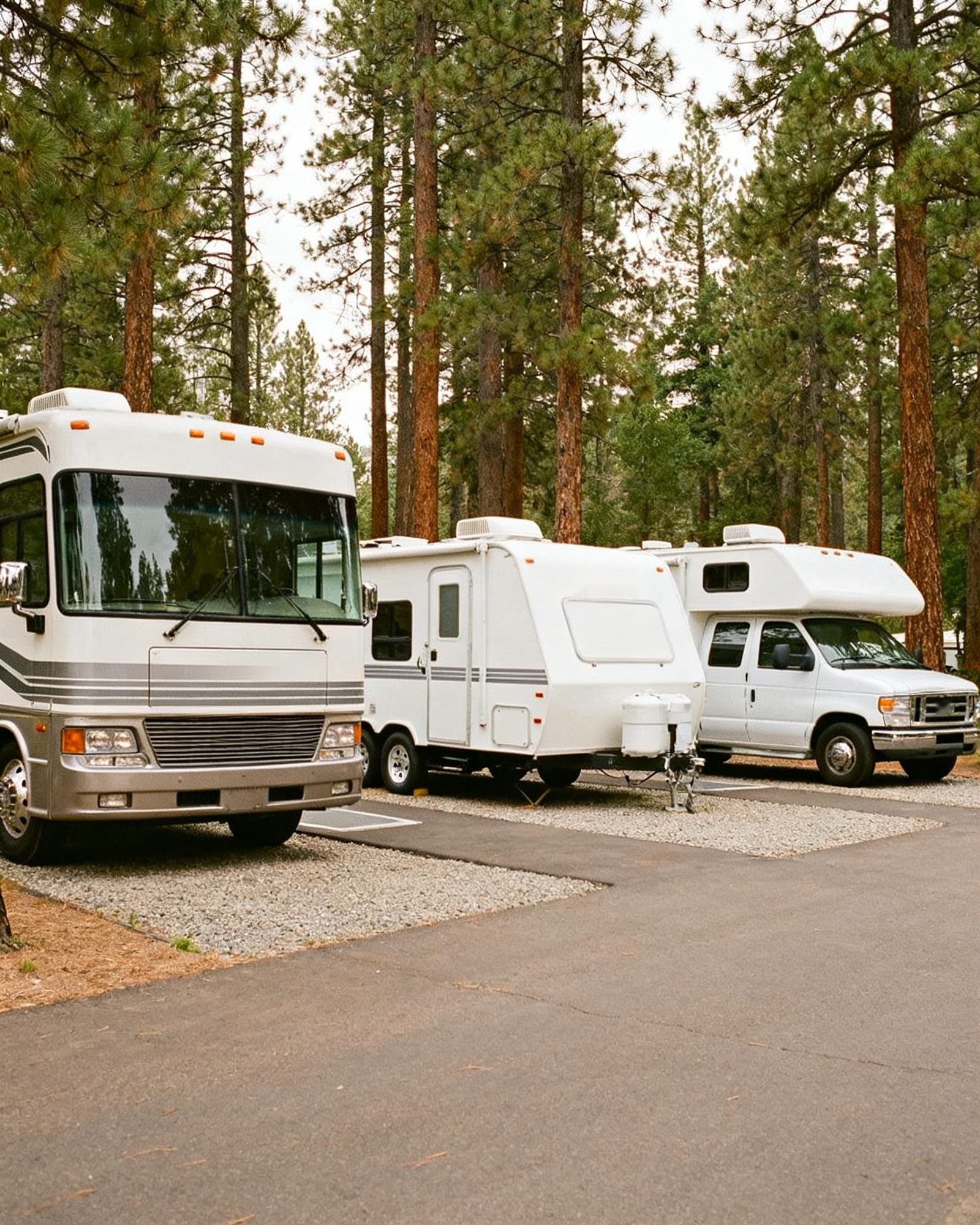
A Class A motorhome is the largest motorized RV class: a box-shaped body with a flat front and a large windshield, built on a purpose-built motorhome chassis or a commercial truck or bus chassis. They run roughly 25 to 45 feet long. The main choice for a used buyer is gas front-engine or diesel pusher, and the two drive, cost and wear differently.
How a Class A is built and who it suits
A Class A has its own engine and drivetrain. The living area sits behind the windshield, so the driver and passenger sit at the front of the box rather than in a van cab. That gives a wide view and a large living space, but it also means a long, heavy vehicle with a high center of gravity.
Gas models usually have the engine at the front, under a cover between the driver and passenger seats. Diesel models usually have the engine at the rear and are called diesel pushers. The layout affects noise, ride, maintenance access and how much weight can be carried or towed.
A Class A suits a buyer who wants maximum living space, a large fresh and waste water capacity, and the ability to tow a car behind. It is less suited to narrow roads, older public campgrounds with short sites, or buyers who are not comfortable with a large vehicle. For a full comparison of the other classes, see RV types explained: Class A, B and C motorhomes and towables. If a smaller motorhome fits your use, read used Class C motorhomes: who they suit and what to check.
Gas front-engine vs diesel pusher: the real differences
| Point | Gas front-engine Class A | Diesel pusher Class A |
|---|---|---|
| Engine location | Front, between the seats | Rear |
| Noise and heat at the driver | Higher, especially on grades | Lower, engine is behind the living area |
| Ride and handling | Adequate; lighter chassis | Usually heavier chassis, more stable in wind |
| Maintenance access | Under the front cover, often tight | Rear access panel or hatch |
| Fuel and service | Generally simpler; more shops can service it | Usually more expensive to service |
| Towing a car behind | Possible within ratings; check GCWR | Often more capable within ratings; check GCWR |
| Climbing grades | Works harder, louder | Usually less effort |
| Purchase and running cost | Generally lower | Generally higher |
| Best for | Shorter trips, lighter toads, lower budget | Long trips, heavy toads, more comfort |
Neither is better in every case. A gas Class A can be the right choice for a couple doing regional trips with a small towed car. A diesel pusher can make sense for a full-timer covering long distances with a heavier toad. The condition of the specific used RV matters more than the label.
What a diesel pusher does well
The engine at the rear keeps noise and heat away from the driver and passenger. The heavier chassis and longer wheelbase usually give a more settled ride in crosswinds. A diesel pusher often has a higher gross combined weight rating, so it can tow a heavier car behind within its ratings. The rear engine also frees up the front for a flat floor and a large living area.
What a gas Class A does well
A gas front-engine Class A is generally simpler and less expensive to service. The engine is accessible from inside the coach, and many chassis parts are common. It is usually lighter, which can help on softer ground and in older campgrounds. For shorter trips and lighter toads, it does the job without the extra cost of diesel maintenance.
Size, height and where a Class A can go
A Class A is roughly 25 to 45 feet long. That length limits where it fits. Many older public campgrounds have sites too short for large RVs; check the site length before booking. Tight turns, narrow town streets and low tree branches are the usual problems.
Federal rules allow vehicles up to 102 inches (8.5 feet) wide on the National Network of highways, not counting mirrors and certain safety devices. Height limits are set by the states. Know the RV’s exact height, including roof air conditioners and antennas, and keep it written where the driver can see it.
Licensing for heavy Class A motorhomes
The federal commercial driver’s license does not apply to personal-use RVs, but some states require a special non-commercial license or endorsement for heavy motorhomes or long or heavy combinations. A GVWR over 26,000 pounds is a common threshold, but each state sets its own. Check your state DMV before you buy.
What to inspect on a used Class A
An independent RV inspector, chosen and paid by the buyer, examines an RV before purchase. On a motorhome, a lab analysis of engine oil, coolant and transmission fluid can be added. Use the used RV inspection checklist: what to check before you buy as your working list, and add the Class A items below.
Chassis, engine and drivetrain
- Check for rust on the frame, especially around the rear axle and hitch.
- Look for oil or coolant leaks under the engine and at the rear of a diesel pusher.
- Ask for service records. A diesel pusher with no records is a risk.
- On a gas model, check the front cover and the engine bay for heat damage and loose belts.
- Test drive on a grade if possible. Note noise, heat, shifting and any vibration.
Generator
A generator is a separate engine and needs its own service. Ask when it was last run and serviced. Start it cold and let it run under load. Generator work is a job for a qualified RV technician; do not attempt repairs yourself.
Slides, roof and seals
Slide-outs add weight, a mechanism and seals to maintain. Look for sagging, water stains and soft spots around each slide. Roof and seam sealants dry out and crack with age and must be inspected and renewed. Check the roof membrane and all corners. A moisture meter on interior walls finds damp that cannot be seen.
Tires and leveling jacks
RV tires often age out before the tread wears out. Check the DOT code on the sidewall: the last four digits give week and year of manufacture. Common guidance is a yearly inspection once tires are 5 years old and replacement no later than 10 years from the date of manufacture, whatever the tread looks like. Inflate to the pressure for the actual load, measured cold. See RV tires: age, load and pressure for the full method.
Leveling jacks should extend and retract smoothly. Look for bent rams, leaks and cracked pads. Test them on a level surface and listen for unusual noise.
Weight ratings and towing a car behind
Know the GVWR, GCWR and GAWR. The only way to know actual weight is a public scale: weigh fully loaded, by axle where possible. If you plan to tow a car behind, the combined weight of the RV, the car and the hitch must stay within the GCWR. A weight-distributing hitch and sway control apply to trailers, not to a car towed four-down, but the same rule applies: never use a hitch, ball or receiver rated below the load.
What goes wrong on used Class A motorhomes
Water damage is among the most common and most expensive defects in used RVs. On a Class A, check the roof, the front cap, the slide-outs and the rear cap. Soft spots in floors, walls or ceiling, stains, sagging, rot around windows, roof vents and corners, and a musty smell are all red flags.
A diesel pusher with a neglected cooling system or a gas model with a neglected transmission can cost more than the RV is worth. Service records matter more than mileage on a used diesel pusher. A low-mileage diesel that sat for years can have dried seals and old fluids.
Generator and propane system problems can turn up on older units. Propane system work, leak testing, regulators, lines and appliances, is a job for a qualified RV technician. Work on 120-volt or 240-volt wiring, the converter, inverter or generator is also a job for a qualified RV technician. Do not attempt repairs yourself.
Title problems are another risk. A branded title affects financing, insurance and resale. Check the VIN on the title, the registration and the federal certification label; they must all match. A motorhome can have safety recalls from two makers: the chassis manufacturer and the company that built the living area. Use the NHTSA recall lookup by VIN.
Finally, a long loan term lowers the monthly payment but raises the total interest paid and raises the chance of owing more than the RV is worth. Compare APRs and total cost, not monthly payments. Check with your lender.
A short pre-purchase checklist for a used Class A
- Title and VIN match, any lien released, seller ID matches the title.
- Service records for engine, transmission and generator.
- No water stains, soft spots or musty smell.
- Roof and seals recently renewed or in good condition.
- Tires within common age guidance and correctly inflated.
- Slides and leveling jacks operate smoothly.
- All alarms tested and within replacement date.
- Weight ratings understood, with a plan to weigh it loaded at a public scale.
- Independent inspection completed before payment.
Rules on titling, registration, sales tax and licensing vary by state: check your state DMV. For propane, electrical and generator work, use a qualified RV technician.
Common questions
What is the difference between a gas Class A and a diesel pusher?
A gas Class A has its engine at the front, usually under a cover between the seats. A diesel pusher has its engine at the rear. Diesel pushers usually have a heavier chassis, a quieter ride and a higher towing capacity within ratings, but they cost more to service.
Can I tow a car behind a Class A motorhome?
Yes, within the RV's gross combined weight rating (GCWR). The combined weight of the motorhome, the towed car and the hitch must stay under the GCWR, and the motorhome's hitch must be rated for the load. The car's maker must approve it for towing that way, or it goes on a dolly or trailer, and brake rules for a towed car vary by state - check your state DMV. Weigh the rig fully loaded at a public scale.
Do I need a special license to drive a Class A motorhome?
The federal commercial driver's license does not apply to personal-use RVs, but some states require a special non-commercial license or endorsement for heavy motorhomes or long combinations. A GVWR over 26,000 pounds is a common threshold. Check your state DMV.
What should I check on a used diesel pusher?
Ask for service records for the engine, transmission and generator. Look for oil or coolant leaks at the rear. Check the cooling system, the age of the tires and the condition of the roof and seals. A lab analysis of engine oil, coolant and transmission fluid can be added to an inspection.
How old can RV tires be before replacement?
Common guidance is a yearly inspection once tires are 5 years old and replacement no later than 10 years from the date of manufacture, whatever the tread looks like. The DOT code on the sidewall gives the week and year of manufacture.
Read next
Used 4x4 Motorhomes and Off-Road Campers in the USA
Compare used 4x4 motorhome types: camper vans, 4x4 Class C, truck campers and expedition trucks. Learn what four-wheel drive adds and what to inspect.
Used Class B RVs and Camper Vans: What to Check
A practical guide to buying a used Class B RV or camper van: how they are built, who they suit, wet baths, tank sizes, home conversions and what to inspect.
Used Class C Motorhomes: Who They Suit and What to Check
How a used Class C motorhome is built, who it suits, how it drives, and what to inspect - especially the cabover, the classic spot for water leaks.